
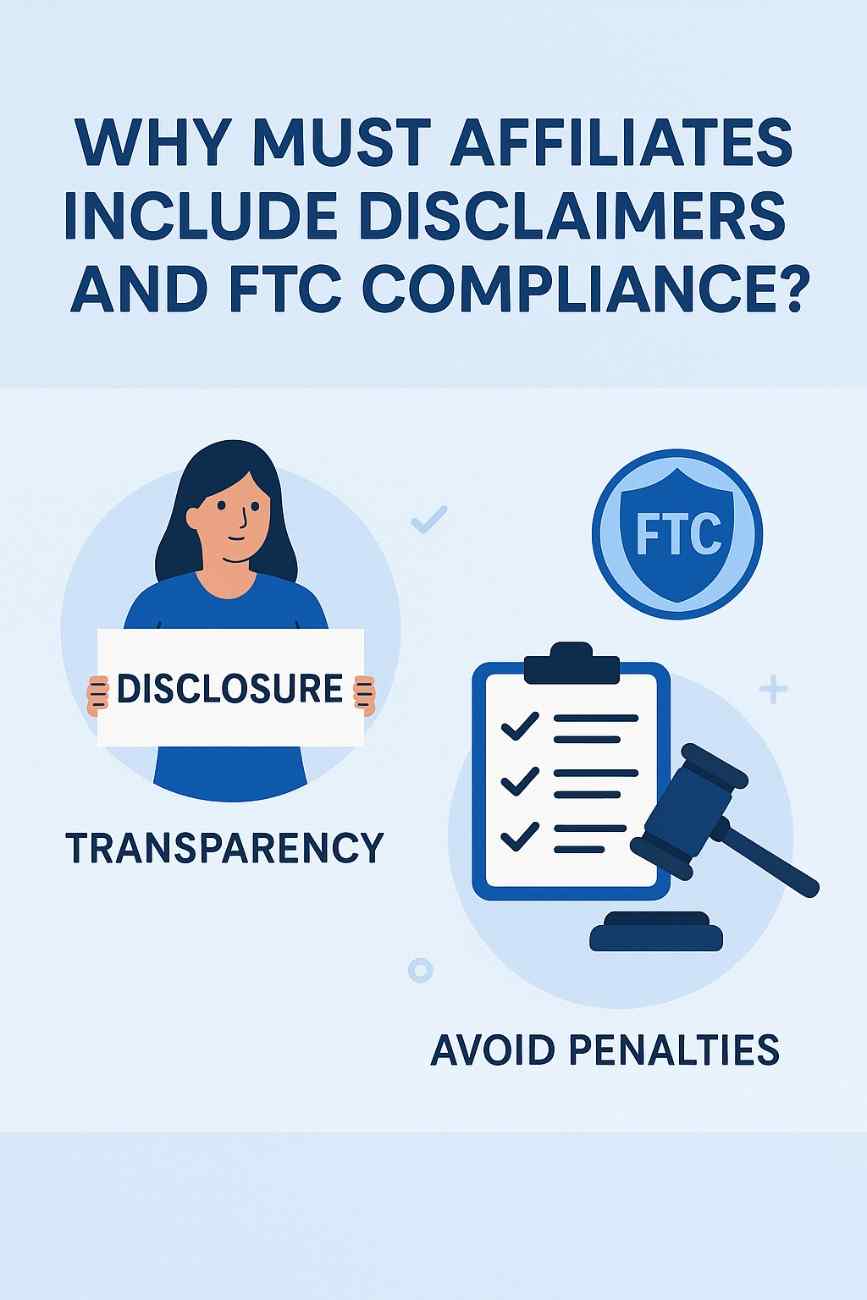
In the world of affiliate marketing, where individuals or businesses earn commissions by promoting products or services, transparency and ethical practices are paramount. One critical aspect of maintaining trust and adhering to legal standards is the inclusion of disclaimers and compliance with the Federal Trade Commission (FTC) guidelines in the United States. These requirements are not just bureaucratic formalities; they serve to protect consumers, ensure fair marketing practices, and shield affiliates from potential legal repercussions. This comprehensive explanation, spanning at least 1,200 words, will delve into the reasons why affiliates must include disclaimers and adhere to FTC compliance, explore the legal and ethical implications, and provide a practical example to illustrate their application.
Understanding Affiliate Disclaimers and FTC Compliance
What Are Affiliate Disclaimers?
An affiliate disclaimer is a statement that discloses the affiliate’s relationship with the merchant or company whose products or services they are promoting. It informs the audience that the affiliate may earn a commission or other compensation for purchases or actions (e.g., sign-ups, clicks) made through their affiliate links. The disclaimer is typically placed on websites, blog posts, social media, emails, or other platforms where affiliate promotions occur.
For example, a simple disclaimer might read:
“Some of the links in this post are affiliate links, which means I may earn a commission if you make a purchase, at no additional cost to you.”
What Is FTC Compliance?
The Federal Trade Commission (FTC) is a U.S. government agency responsible for protecting consumers and promoting fair competition in the marketplace. The FTC’s Endorsement Guides outline rules for endorsements and testimonials, including those in affiliate marketing. These guidelines require affiliates to disclose any “material connection” to the merchant, meaning any financial or other benefit they receive from promoting a product or service. The goal is to ensure transparency so consumers can make informed decisions without being misled by biased or undisclosed promotions.
FTC compliance involves:
- Clear Disclosure: Affiliates must clearly and conspicuously disclose their affiliate relationship.
- Honesty in Endorsements: Any claims about a product must be truthful, substantiated, and reflect the affiliate’s honest opinion or experience.
- Proximity to Affiliate Links: Disclosures should be placed close to the affiliate links or promotional content, ensuring they are noticeable before a consumer takes action.
Why Affiliates Must Include Disclaimers and FTC Compliance
The inclusion of disclaimers and adherence to FTC guidelines are non-negotiable for affiliates for several compelling reasons, spanning legal, ethical, and practical considerations.
1. Legal Obligations and Avoiding Penalties
The FTC’s Endorsement Guides are legally binding in the United States, and non-compliance can result in significant consequences. The FTC has the authority to investigate and penalize affiliates, influencers, or businesses that fail to disclose material connections or engage in deceptive marketing practices. Penalties can include:
- Fines: The FTC can impose substantial fines, sometimes reaching thousands or millions of dollars, depending on the severity of the violation.
- Cease-and-Desist Orders: Affiliates may be ordered to stop their marketing activities or remove non-compliant content.
- Reputational Damage: Legal action can harm an affiliate’s credibility, making it harder to build trust with their audience or partners.
- Lawsuits: In some cases, consumers or competitors may pursue legal action if they feel misled by undisclosed affiliate relationships.
By including clear disclaimers, affiliates ensure compliance with FTC regulations, reducing the risk of legal repercussions. For example, in 2017, the FTC sent warning letters to influencers and marketers, including affiliates, for failing to disclose material connections on social media platforms like Instagram. This crackdown underscored the importance of transparency in affiliate marketing.
2. Building Consumer Trust
Transparency is a cornerstone of trust in marketing. Consumers are more likely to engage with affiliates who are upfront about their financial incentives. Without a disclaimer, audiences may assume the affiliate’s recommendation is unbiased, only to feel deceived upon learning about the commission structure. This can erode trust, damage the affiliate’s reputation, and reduce long-term engagement.
A clear disclaimer demonstrates honesty and integrity, reassuring consumers that the affiliate is not hiding their motives. For instance, a blogger reviewing a fitness product with a disclaimer like, “I may earn a commission if you purchase through my links,” signals transparency, making the audience more receptive to the recommendation.
3. Protecting Affiliate Program Relationships
Merchants and affiliate programs often require affiliates to comply with FTC guidelines as part of their terms of service. Failure to include proper disclaimers can lead to:
- Termination from Affiliate Programs: Merchants may remove affiliates who violate compliance rules, cutting off their revenue stream.
- Withheld Commissions: Some programs withhold payments if affiliates fail to follow disclosure requirements.
- Brand Reputation: Non-compliant affiliates risk damaging the merchant’s reputation, which can strain partnerships.
By adhering to FTC guidelines, affiliates maintain good standing with merchants, ensuring continued access to affiliate programs and commissions.
4. Ethical Marketing Practices
Beyond legal requirements, disclaimers align with ethical marketing principles. Affiliates have a moral responsibility to be honest with their audience, especially when their recommendations influence purchasing decisions. Disclosing affiliate relationships respects the audience’s right to know about potential biases, fostering a culture of fairness and accountability in digital marketing.
5. Enhancing Credibility and Professionalism
A well-crafted disclaimer can enhance an affiliate’s credibility by positioning them as a professional who adheres to industry standards. Consumers and brands are more likely to trust affiliates who demonstrate compliance with regulations, as it signals a commitment to ethical practices. This can lead to increased conversions, as audiences feel confident in the affiliate’s recommendations.
6. Applicability Beyond the U.S.
While FTC guidelines apply specifically to the U.S., similar regulations exist in other countries, such as the Advertising Standards Authority (ASA) in the UK or the Competition Bureau in Canada. Affiliates with international audiences must ensure compliance with local laws, which often require similar disclosures. Including disclaimers helps affiliates operate globally while minimizing legal risks.
7. Preventing Misleading Claims
The FTC requires that endorsements reflect the affiliate’s honest opinion and be substantiated by evidence. Disclaimers often accompany statements clarifying that results may vary (e.g., “Results are not typical”) to avoid misleading consumers. This is particularly important in niches like health, finance, or weight loss, where exaggerated claims can lead to consumer harm or legal scrutiny.
Key Elements of an Effective Affiliate Disclaimer
To comply with FTC guidelines and achieve the benefits outlined above, affiliate disclaimers must meet specific criteria:
- Clarity: The disclaimer should be easy to understand, avoiding jargon or vague language.
- Conspicuousness: It must be noticeable, placed near the affiliate link or promotional content, and not buried in fine print or a separate page.
- Frequency: Disclosures should appear in every piece of content containing affiliate links, including blog posts, social media posts, emails, and videos.
- Platform-Specific Adaptation: For example, on Twitter, where space is limited, a hashtag like #ad or #affiliate may suffice, while a blog post requires a more detailed statement.
- Honesty: The disclaimer should accurately reflect the affiliate’s relationship with the merchant, such as whether they receive a commission, free products, or other benefits.
Example of Affiliate Disclaimers and FTC Compliance in Action
Let’s explore a practical example to illustrate how affiliates incorporate disclaimers and ensure FTC compliance.
Scenario
An affiliate runs a personal finance blog targeting millennials interested in saving money and investing. They promote a robo-advisor platform (e.g., Wealthfront or Betterment) that pays a $50 commission for each new user who signs up and deposits a minimum amount. The affiliate creates a blog post titled “Top 5 Robo-Advisors for Beginners in 2025” and includes affiliate links to the platform.
Step 1: Crafting the Disclaimer
The affiliate includes a clear, conspicuous disclaimer at the top of the blog post, before any affiliate links appear:
“Disclosure: This post contains affiliate links. If you click on a link and make a purchase or sign up for a service, I may earn a commission at no additional cost to you. All opinions are my own, and I only recommend products I believe in. Thank you for supporting my blog!”
This disclaimer is:
- Clear: It explicitly states the affiliate relationship and commission potential.
- Conspicuous: Placed at the top of the post, in a readable font size and color.
- Honest: It clarifies that opinions are the affiliate’s own and that there’s no extra cost to the consumer.
Step 2: Social Media Promotion
The affiliate promotes the blog post on Instagram and Twitter. On Instagram, they share a post with a swipe-up link to the blog and include the caption:
“Check out my latest post on the best robo-advisors for beginners! 📈 #ad #affiliate Link in bio.”
On Twitter, due to character limits, they use:
“Top 5 robo-advisors for new investors! Read my blog to start investing smart. #affiliate [link]”
Both posts use hashtags to disclose the affiliate relationship, ensuring compliance on platforms with limited space.
Step 3: Email Campaign
The affiliate sends an email to their subscriber list with a summary of the blog post and a call-to-action to read it. The email includes the affiliate link and a disclaimer at the bottom:
“This email contains affiliate links. I may earn a commission if you sign up for a service through these links, at no extra cost to you.”
Step 4: Video Content
The affiliate creates a YouTube video reviewing the robo-advisor. They include a verbal disclosure at the start of the video:
“Hey everyone, just a quick note: some links in the description are affiliate links, meaning I might earn a commission if you sign up, at no cost to you.”
The same disclosure is repeated in the video description.
Step 5: Compliance with Claims
In the blog post, the affiliate claims, “This robo-advisor helped me automate my investments and save time.” To comply with FTC rules, they ensure this statement reflects their actual experience and add a disclaimer:
“Results may vary depending on your financial situation and investment choices.”
Why This Works
This approach ensures FTC compliance by:
- Disclosing the affiliate relationship across all platforms (blog, social media, email, video).
- Placing disclosures prominently to avoid misleading consumers.
- Ensuring claims are truthful and substantiated, with a note about varying results.
- Maintaining transparency, which builds trust with the audience and protects the affiliate from legal risks.
Outcomes
- Consumer Trust: Readers and viewers appreciate the transparency, increasing their likelihood of clicking the affiliate links.
- Legal Protection: The affiliate avoids FTC scrutiny by following disclosure guidelines.
- Program Compliance: The robo-advisor platform is satisfied with the affiliate’s ethical practices, maintaining their partnership.
- Conversions: The clear, honest approach leads to higher engagement and sign-ups, boosting commissions.
Additional Considerations
International Compliance
Affiliates with global audiences must research local regulations. For example, the UK’s ASA requires disclosures like “#ad” for sponsored or affiliate content, while Canada’s Competition Bureau mandates clear identification of paid promotions.
Regular Updates
Affiliates should review their disclaimers periodically to ensure they align with updated FTC guidelines or merchant terms. For instance, if an affiliate starts receiving free products in addition to commissions, the disclaimer must reflect this.
Automation Tools
Affiliates can use plugins or tools (e.g., WordPress plugins like WP Disclosure) to automatically add disclaimers to blog posts, ensuring consistency and saving time.
Conclusion
Affiliate disclaimers and FTC compliance are non-negotiable components of ethical and legal affiliate marketing. They protect affiliates from legal penalties, foster consumer trust, maintain merchant relationships, and uphold ethical standards. By clearly disclosing material connections and ensuring honest endorsements, affiliates not only comply with regulations but also enhance their credibility and long-term success. The example of the personal finance blog demonstrates how to seamlessly integrate disclaimers across multiple platforms while maintaining transparency and driving conversions. In an industry built on trust and relationships, adhering to FTC guidelines through proper disclaimers is not just a legal requirement—it’s a strategic advantage that benefits affiliates, merchants, and consumers alike.

