
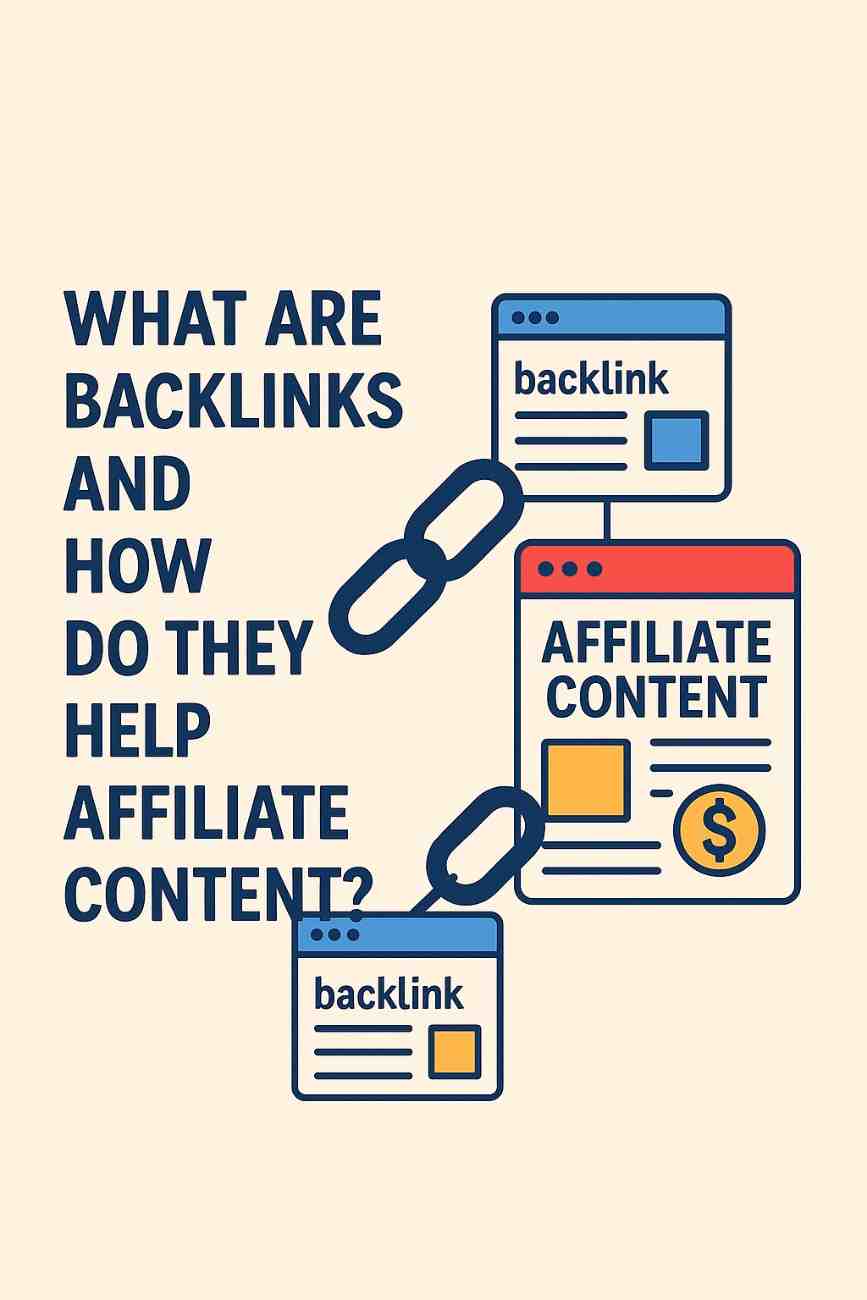
In the realm of digital marketing, backlinks—also known as inbound or incoming links—are hyperlinks from one website to another. They are a critical component of Search Engine Optimization (SEO) and play a significant role in enhancing the visibility, credibility, and performance of affiliate content. For affiliate marketers, who rely on driving traffic to content embedded with affiliate links to earn commissions, backlinks are a powerful tool to boost search engine rankings, attract targeted audiences, and increase conversions. In 2025, with search engines like Google prioritizing high-quality, authoritative content under its E-E-A-T (Experience, Expertise, Authoritativeness, Trustworthiness) guidelines, understanding and leveraging backlinks is essential for success in affiliate marketing. This essay explores the nature of backlinks, their importance in affiliate marketing, strategies to acquire them, challenges, and benefits, followed by a practical example to illustrate their application.
Understanding Backlinks
A backlink occurs when an external website links to a page on your site. For example, if a tech blog links to your affiliate review of a laptop, that’s a backlink. Search engines view backlinks as “votes of confidence,” signaling that your content is valuable and trustworthy. However, not all backlinks are equal. Their quality depends on factors like:
- Authority of the Linking Site: Backlinks from high-authority sites (e.g., Forbes, TechRadar) carry more weight than those from low-quality or spammy sites.
- Relevance: Links from sites in the same niche (e.g., a tech site linking to a gadget review) are more valuable than unrelated links.
- Anchor Text: The clickable text of the link (e.g., “best laptops 2025”) should be relevant to your content.
- Dofollow vs. Nofollow: Dofollow links pass SEO authority, while nofollow links (often used in forums or comments) don’t, though they can still drive traffic.
- Link Placement: Links within content (e.g., in a blog post) are more impactful than footer or sidebar links.
In affiliate marketing, backlinks enhance content like product reviews, comparison posts, or guides, which contain affiliate links to merchant sites (e.g., Amazon, ShareASale). By improving the SEO performance of this content, backlinks indirectly boost affiliate earnings.
How Backlinks Help Affiliate Content
Backlinks are a cornerstone of affiliate marketing success because they directly and indirectly contribute to traffic, rankings, and conversions. Here’s how they benefit affiliate content:
1. Improve Search Engine Rankings
Search engines, particularly Google, use backlinks as a key ranking factor. A page with high-quality backlinks is seen as authoritative, increasing its likelihood of ranking higher for target keywords.
- Impact: Higher rankings for affiliate content (e.g., a post targeting “best budget headphones 2025”) attract more organic traffic, leading to more affiliate link clicks.
- Example: A backlink from a tech blog to your headphone review can push it from page 2 to page 1 on Google, significantly increasing visibility.
- Significance: Organic traffic is cost-effective and sustainable, ideal for affiliates with limited budgets.
2. Drive Referral Traffic
Backlinks from relevant, high-traffic sites can send targeted visitors directly to your affiliate content.
- Impact: Visitors from niche-related sites (e.g., a fitness blog linking to your yoga mat review) are more likely to engage with your content and click affiliate links due to their pre-existing interest.
- Example: A link from a student-focused blog to your “best laptops for students” post can drive 100 monthly visitors, some of whom convert via your Amazon links.
- Significance: Referral traffic supplements organic search, diversifying traffic sources and reducing reliance on SEO alone.
3. Enhance Credibility and Trust
Backlinks from reputable sites signal to both search engines and users that your content is trustworthy, aligning with Google’s E-E-A-T guidelines.
- Impact: In affiliate marketing, trust is critical, especially in YMYL (Your Money, Your Life) niches like finance or health. Credible backlinks make readers more likely to trust your recommendations and act on affiliate links.
- Example: A backlink from a well-known finance blog to your review of a budgeting app enhances your authority, encouraging sign-ups.
- Significance: Trust increases conversion rates, as readers are more comfortable purchasing through your links.
4. Boost Domain Authority
Backlinks contribute to your site’s overall Domain Authority (DA), a metric (developed by Moz) that predicts how well a site will rank. Higher DA improves rankings for all your content, not just the linked page.
- Impact: A site with strong backlinks ranks better for multiple affiliate posts, amplifying earnings across your portfolio.
- Example: Backlinks to your tech blog from various gadget sites increase your DA, helping new posts (e.g., “best smartwatches 2025”) rank faster.
- Significance: Higher DA creates a compounding effect, making future content creation more impactful.
5. Support Long-Term, Passive Income
Backlinks contribute to evergreen content by maintaining or improving rankings over time, generating consistent traffic to affiliate links.
- Impact: Unlike paid ads, which stop driving traffic when funding ends, backlinks provide ongoing benefits, supporting passive income goals.
- Example: A backlink from a 2023 guest post continues driving traffic to your affiliate review in 2025, yielding commissions years later.
- Significance: Evergreen traffic aligns with affiliate marketing’s goal of sustainable earnings.
6. Amplify Content Reach
Backlinks expose your content to new audiences through the linking site’s readership, social shares, or secondary links.
- Impact: Increased exposure in niche communities (e.g., tech forums) can lead to additional backlinks or social engagement, further boosting SEO and traffic.
- Example: A backlink from a Reddit thread discussing headphones spreads to other forums, amplifying your review’s reach.
- Significance: Broader reach diversifies traffic and enhances brand awareness for your affiliate content.
Strategies to Acquire Backlinks for Affiliate Content
Building high-quality backlinks requires proactive effort and ethical practices, as low-quality or spammy links can harm rankings. Here are the best strategies for 2025:
- Guest Posting:
- Write high-value articles for reputable blogs in your niche, including a backlink to your affiliate content. For example, a guest post on a tech blog about “Top Gadgets for 2025” can link to your laptop review.
- Tool: BuzzSumo (free trial) to find guest posting opportunities.
- Tip: Focus on sites with high DA and niche relevance.
- Create Shareable Content:
- Develop in-depth, unique content like guides, infographics, or comparison posts that naturally attract links. For example, “Ultimate Guide to Choosing Wireless Earbuds” may earn links from tech sites.
- Tool: Canva (free) for infographics, Ahrefs (~$99/month) to analyze competitors’ linkable content.
- Tip: Promote content on X or Reddit to encourage shares.
- Engage in Niche Communities:
- Participate in forums (e.g., Reddit’s r/TechGadgets), Quora, or niche groups, subtly linking to your content where allowed. For example, answer a question about headphones with a link to your review.
- Tool: Bitly (free) for trackable links.
- Tip: Prioritize value over promotion to avoid bans.
- Broken Link Building:
- Identify broken links on relevant sites using Ahrefs or Check My Links (free Chrome extension), then suggest your affiliate content as a replacement.
- Example: Replace a broken link to a laptop review with your post.
- Tip: Personalize outreach emails to site owners.
- Collaborate with Influencers or Bloggers:
- Partner with niche influencers or bloggers to co-create content or earn mentions with backlinks. For example, a fitness influencer might link to your yoga mat comparison in a workout guide.
- Tool: Hunter.io (free) for finding blogger emails.
- Tip: Offer value (e.g., free content) in exchange for links.
- Resource Page Outreach:
- Find resource pages in your niche (e.g., “Best Tech Resources”) and pitch your affiliate content for inclusion.
- Tool: Google Search (free) with queries like “tech resources inurl:links.”
- Tip: Highlight your content’s unique value.
Challenges of Using Backlinks in Affiliate Marketing
- Time-Intensive: Building high-quality backlinks via guest posting or outreach takes weeks or months.
- Quality vs. Quantity: Low-quality or spammy links (e.g., from link farms) can trigger Google penalties, harming rankings.
- Rejection Risk: Outreach efforts may face low response rates, requiring persistence.
- Niche Relevance: Securing relevant backlinks in competitive niches like tech or finance is harder than in less crowded ones.
- Cost: Premium tools like Ahrefs or paid guest posts (~$50–$200) may strain beginner budgets.
Benefits of Backlinks for Affiliate Content
- Higher Rankings: Boosts visibility for affiliate posts, driving organic traffic.
- Targeted Traffic: Attracts niche audiences likely to convert via affiliate links.
- Increased Trust: Enhances credibility, critical for YMYL niches.
- Passive Income: Supports evergreen content for long-term earnings.
- Scalability: Higher DA improves rankings for all content, amplifying income potential.
Example: Using Backlinks to Boost Affiliate Content
Scenario: Alex, a 21-year-old student, wants to earn $200/month promoting fitness products in the “home workout gear” niche. He creates a comparison post and uses backlinks to enhance its performance.
Step-by-Step Approach:
- Choose Niche and Content (Week 1):
- Alex selects “home workout gear” and creates a comparison post, “Resistance Bands vs. Dumbbells: Best for Home Workouts in 2025,” targeting students. He joins Amazon Associates (4–8% commissions) and Rogue Fitness via ShareASale (5–10% commissions).
- Create Comparison Post (Weeks 2–3):
- Alex uses Wix (free) to build a blog, “FitStudentHub,” and writes a 1,800-word post optimized for “resistance bands vs. dumbbells 2025” using Ubersuggest (free).
- Structure: Includes a comparison table (price, portability, versatility), pros/cons, and CTAs with affiliate links (via Bitly). He adds a Canva infographic and an FTC disclosure.
- SEO: Uses Yoast SEO (free) for on-page optimization and submits a sitemap via Google Search Console (free).
- Build Backlinks (Weeks 4–12):
- Guest Posting: Alex writes a guest post, “Top 5 Home Workout Tools for Students,” for a fitness blog (DA 40), linking to his comparison post. He finds the opportunity via BuzzSumo.
- Community Engagement: He answers questions on Reddit’s r/Fitness (e.g., “Bands or dumbbells for beginners?”), linking to his post, earning 5 backlinks from forum threads.
- Broken Link Building: Using Check My Links, Alex finds a broken link on a fitness site’s resource page and pitches his post as a replacement, securing 1 backlink.
- Resource Page Outreach: He emails 20 fitness resource pages, landing 2 backlinks by highlighting his post’s value.
- Total: 8 high-quality backlinks from niche sites.
- Promote Content (Weeks 13–16):
- Alex shares pins on Pinterest, driving 1,000 visitors/month. He posts Instagram reels showing band workouts, gaining 400 followers and 100 clicks/month via Linktree.
- Using Mailchimp (free), he offers a “7-Day Home Workout Plan,” collecting 150 subscribers and sending newsletters with his post’s link.
- Track and Optimize (Weeks 17–24):
- Google Analytics shows 2,500 monthly visitors, with backlinks contributing 30% of traffic. The post ranks on Google’s page 1 for “resistance bands vs. dumbbells,” boosting organic clicks.
- Amazon reports 20 band sales ($500 total, $25 commission at 5%) and Rogue reports 10 dumbbell sales ($1,000 total, $80 commission at 8%), totaling $105/month.
- Alex updates the post with 2025 pricing and adds a YouTube comparison video, earning 5 more backlinks from video shares, pushing earnings to $210/month.
Analysis: Alex’s backlinks from guest posts, forums, and resource pages significantly boost his post’s ranking and traffic, driving targeted clicks to affiliate links. Free tools (Wix, Canva, Ubersuggest, Mailchimp) and strategic outreach keep costs low ($0 except time). His multi-channel promotion (Pinterest, Instagram, email) amplifies reach, while backlinks ensure long-term visibility. Exceeding his $200/month goal, Alex demonstrates how backlinks can transform affiliate content performance.
Best Practices for Backlinks in Affiliate Marketing
- Prioritize Quality: Focus on high-DA, niche-relevant backlinks over quantity.
- Be Ethical: Avoid black-hat tactics like buying links, which risk penalties.
- Diversify Sources: Combine guest posts, forums, and resource pages for a natural link profile.
- Monitor Links: Use Ahrefs or Google Search Console to track backlinks and disavow harmful ones.
- Stay Relevant: Ensure anchor text and linking sites align with your content.
- Leverage Free Tools: Use Canva, Bitly, and Hunter.io to minimize costs.
Conclusion
Backlinks are hyperlinks from external sites that significantly enhance affiliate content by improving search engine rankings, driving referral traffic, boosting credibility, and supporting passive income. In affiliate marketing, they amplify the visibility of content like reviews or comparisons, increasing clicks on affiliate links and commissions. Strategies like guest posting, shareable content, and community engagement build high-quality backlinks, though challenges like time investment and rejection risks require persistence. Alex’s example in the fitness niche shows how a beginner can use backlinks to earn $210/month, leveraging free tools and strategic outreach. In 2025, as search engines prioritize authority and relevance, backlinks remain a vital tool for affiliates to achieve sustainable success, driving targeted traffic and maximizing earnings in the competitive digital landscape.

