
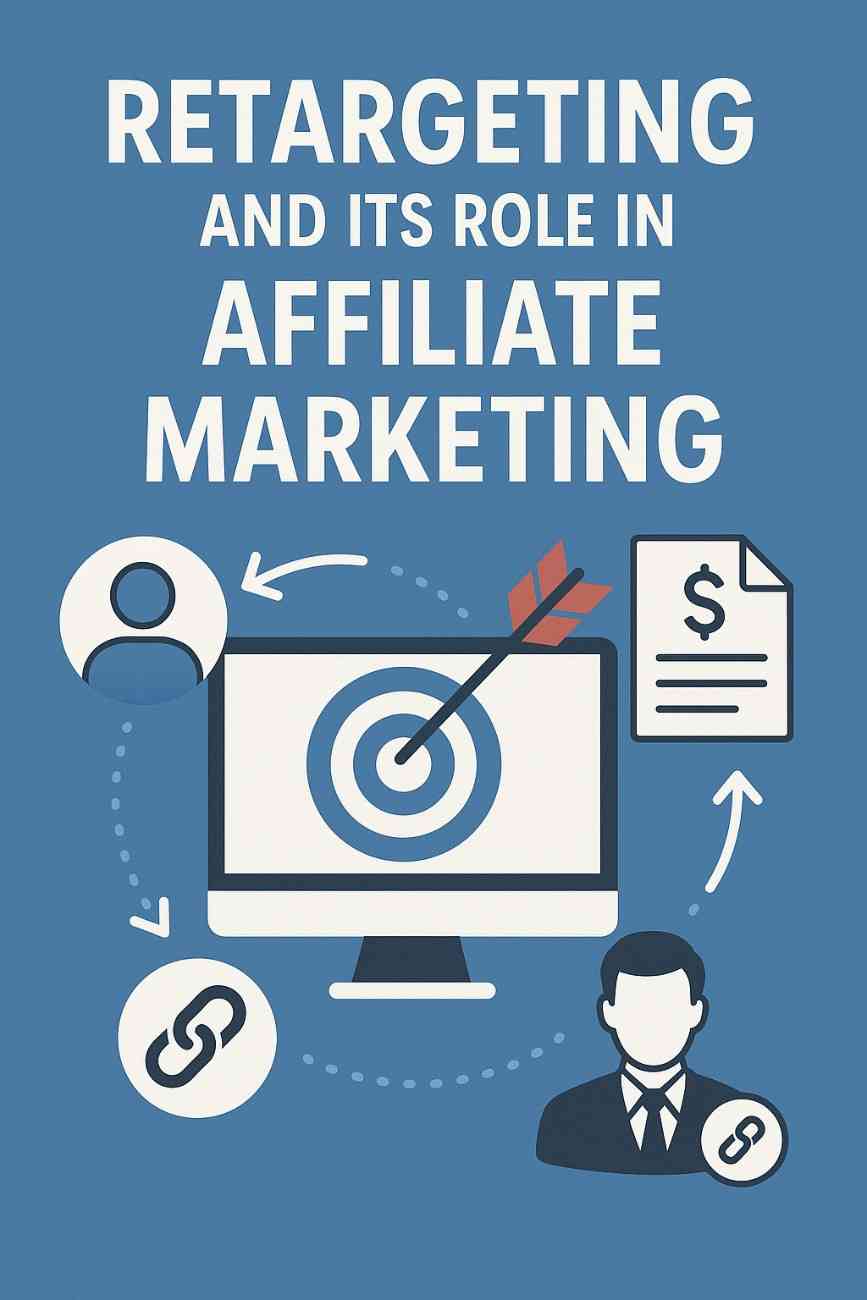
In the competitive world of digital marketing, brands strive to capture and retain user attention. However, data shows that about 98% of visitors leave a website without taking any action, such as purchasing a product or signing up for a service. This is where retargeting comes into play. Retargeting is a highly effective strategy that helps bring back these visitors and increases the chances of conversion.
In the realm of affiliate marketing, retargeting has become an essential tool for driving sales and maximizing commissions. By showing relevant ads to users who have already interacted with a website or product, affiliates can dramatically improve conversion rates and boost their income. This article will explain what retargeting is, how it works, and how it is used in affiliate marketing, including a practical example.
What Is Retargeting?
Retargeting, also known as remarketing, is a form of online advertising that targets users who have previously visited a website or interacted with a brand but did not complete a desired action, such as making a purchase or filling out a form. It works by placing a small piece of code, called a pixel, on the user’s browser, which allows advertisers to track and serve them relevant ads on other websites and platforms.
There are two main types of retargeting:
1. Pixel-Based Retargeting
This involves adding a small, invisible snippet of JavaScript (the tracking pixel) to your website. When a user visits your site, this pixel stores a browser cookie, allowing ad networks like Google Display Network or Facebook Ads to show them relevant ads after they leave.
2. List-Based Retargeting
This method uses a list of email addresses or contact information that is uploaded to an advertising platform. If the platform can match these emails to users, it will show them targeted ads.
How Retargeting Works
Here’s a simple step-by-step breakdown of how retargeting works:
-
User visits a website (e.g., an affiliate blog promoting fitness supplements).
-
A tracking pixel or cookie is placed in their browser.
-
The user leaves the site without buying anything.
-
As the user browses other websites, the retargeting platform (like Google Ads or Facebook Ads) identifies them.
-
The platform then displays targeted ads promoting the same or similar products the user was interested in.
-
The user clicks the ad, returns to the affiliate site, and makes a purchase.
-
The affiliate earns a commission from the sale.
This entire process happens in real time and is largely automated once the retargeting campaigns are set up.
Benefits of Retargeting
Retargeting is extremely powerful and offers several benefits:
1. Increased Conversion Rates
Visitors who are retargeted with display ads are 70% more likely to convert compared to those who are not.
2. Higher ROI
Since the audience has already shown interest, it is more cost-effective to market to them. This leads to a better return on investment (ROI).
3. Brand Recall
Even if a user doesn’t immediately convert, seeing your ad repeatedly builds brand awareness and increases the likelihood of future engagement.
4. Better User Experience
Retargeting can be customized to show relevant and timely ads, improving the user experience and reducing ad fatigue.
How Retargeting Is Used in Affiliate Marketing
Affiliate marketing is a performance-based model where affiliates earn a commission for referring customers to a merchant’s product or service. Retargeting enhances this model by helping affiliates:
1. Re-engage Lost Visitors
Not every visitor will buy something during their first visit. Retargeting allows affiliates to bring these visitors back and give them a second chance to convert.
2. Promote High-Intent Products
Affiliates often promote high-ticket items or services. Retargeting helps push users closer to purchase by reminding them of the value and features they were interested in.
3. Increase Click-Through and Conversion Rates
Since the audience is already familiar with the product, retargeted ads usually have higher CTRs and better conversion rates than standard display ads.
4. Build an Audience for Future Promotions
Using list-based retargeting, affiliates can build a custom audience for future campaigns, creating long-term value.
Popular Retargeting Platforms for Affiliates
Several platforms offer robust retargeting tools that affiliates can use:
-
Facebook Ads – Great for retargeting across Facebook and Instagram.
-
Google Ads (Display Network) – Ideal for showing ads on millions of websites.
-
AdRoll – Offers cross-platform retargeting including web, social, and email.
-
Criteo – Specializes in dynamic retargeting with personalized product ads.
-
Perfect Audience – Known for its simplicity and integration with Shopify, BigCommerce, etc.
A Practical Example: Retargeting in Action
Let’s consider an example to understand how retargeting works in affiliate marketing:
Scenario: Fitness Blog Promoting Protein Supplements
You run a fitness blog and are an affiliate for a company selling organic protein supplements. You write a review post titled “Top 5 Organic Protein Powders for Weight Loss in 2025.” In this article, you include affiliate links to the product pages.
Now, let’s say:
-
5,000 people visit your blog post in a month.
-
Only 2% of them (100 people) click through and make a purchase.
-
You earn a $10 commission per sale, so you make $1,000.
But what about the other 4,900 visitors who left without buying?
Here’s where retargeting comes in.
Implementing Retargeting:
You place a Facebook Pixel and a Google Ads Pixel on your website. Now, when people visit your post, the pixels collect data about them (like their device, behavior, and interests).
You then create two retargeting campaigns:
-
Facebook Campaign
-
Audience: People who visited your “Protein Powder” post.
-
Ad: A video testimonial from someone who lost weight using the protein supplement.
-
Call-to-Action: “Get 20% off your first order – limited time!”
-
-
Google Display Campaign
-
Audience: Same as above.
-
Ad: Banner ad showing the product with “Free Shipping” and a time-sensitive offer.
-
These users start seeing your ads while browsing Instagram, watching YouTube videos, or reading other websites.
Results After Retargeting:
-
From the 4,900 non-buyers, 500 click on your retargeted ads.
-
10% (50 people) convert and buy the product.
-
You earn another $500 in affiliate commissions.
-
Your overall revenue jumps from $1,000 to $1,500, increasing ROI significantly.
This is how retargeting turns missed opportunities into earnings.
Challenges and Best Practices
While retargeting is effective, it must be used strategically to avoid annoying or spamming users.
Challenges:
-
Ad Fatigue – Seeing the same ad too often can turn users away.
-
Privacy Concerns – Users are becoming more aware of how they are tracked.
-
Cost Management – Retargeting ads can get expensive if not monitored.
Best Practices:
-
Frequency Capping – Limit the number of times a user sees your ad.
-
Segmentation – Create different ad creatives for different types of users (e.g., visitors who added a product to cart vs. those who just browsed).
-
Personalization – Use dynamic ads that show the exact product the user viewed.
-
Exclude Converted Users – Don’t show retargeting ads to people who have already purchased through your link.
Conclusion
Retargeting is a powerful digital advertising technique that affiliates can leverage to increase their conversions, sales, and commissions. It allows marketers to reconnect with potential customers who have already shown interest but didn’t take action the first time. In affiliate marketing, where every click and conversion counts, retargeting helps in maximizing the value of traffic and reducing waste.
By combining affiliate marketing strategies with well-targeted retargeting campaigns, affiliates can not only increase their revenue but also build long-term relationships with audiences and advertisers alike.
When done right—with thoughtful segmentation, relevant content, and the right platforms—retargeting can turn your affiliate site into a high-performance, revenue-generating machine.
If you’d like, I can also provide templates for setting up Facebook or Google retargeting ads or tools that help automate this process.

