
v
Affiliate marketing is one of the most powerful and cost-effective ways to generate income online. Whether you’re running a blog, a YouTube channel, a podcast, or building a following on Instagram, the foundation of every successful affiliate marketing strategy is trust.
Without trust, your audience won’t click your links. They won’t buy from your recommendations. They won’t even read your content to the end. And in a world full of clickbait, scams, and aggressive promotions, earning and maintaining that trust is both a challenge and a priority.
In this detailed guide, we’ll cover:
-
What trust means in affiliate marketing
-
Why it’s critical to success
-
How to build trust authentically with your audience
-
Real-world strategies and tips
-
A full example that puts these principles into action
What Is Trust in Affiliate Marketing?
In affiliate marketing, trust means your audience believes in your credibility, values your advice, and feels confident that your recommendations serve their best interest. When your followers see you as a genuine, transparent, and knowledgeable guide—not just someone pushing products—they’re far more likely to take action on your links.
Trust is earned over time. It’s a product of consistency, honesty, empathy, and value delivery. And unlike tactics that give short-term results, trust builds long-term loyalty and sustainable income.
Why Is Trust So Important in Affiliate Marketing?
Here are a few key reasons:
-
Higher Conversion Rates: People buy from sources they trust. Period.
-
Reduced Refunds and Complaints: When your audience believes in your recommendations, they’re less likely to feel misled or regret their purchase.
-
Repeat Traffic and Loyalty: A trusted brand doesn’t need to chase traffic—people come back on their own.
-
Stronger Brand Partnerships: Brands want to work with affiliates who have influence—not just traffic.
In essence, trust compounds your results. You may have fewer views than big influencers, but if you have deep trust, your content can still outperform.
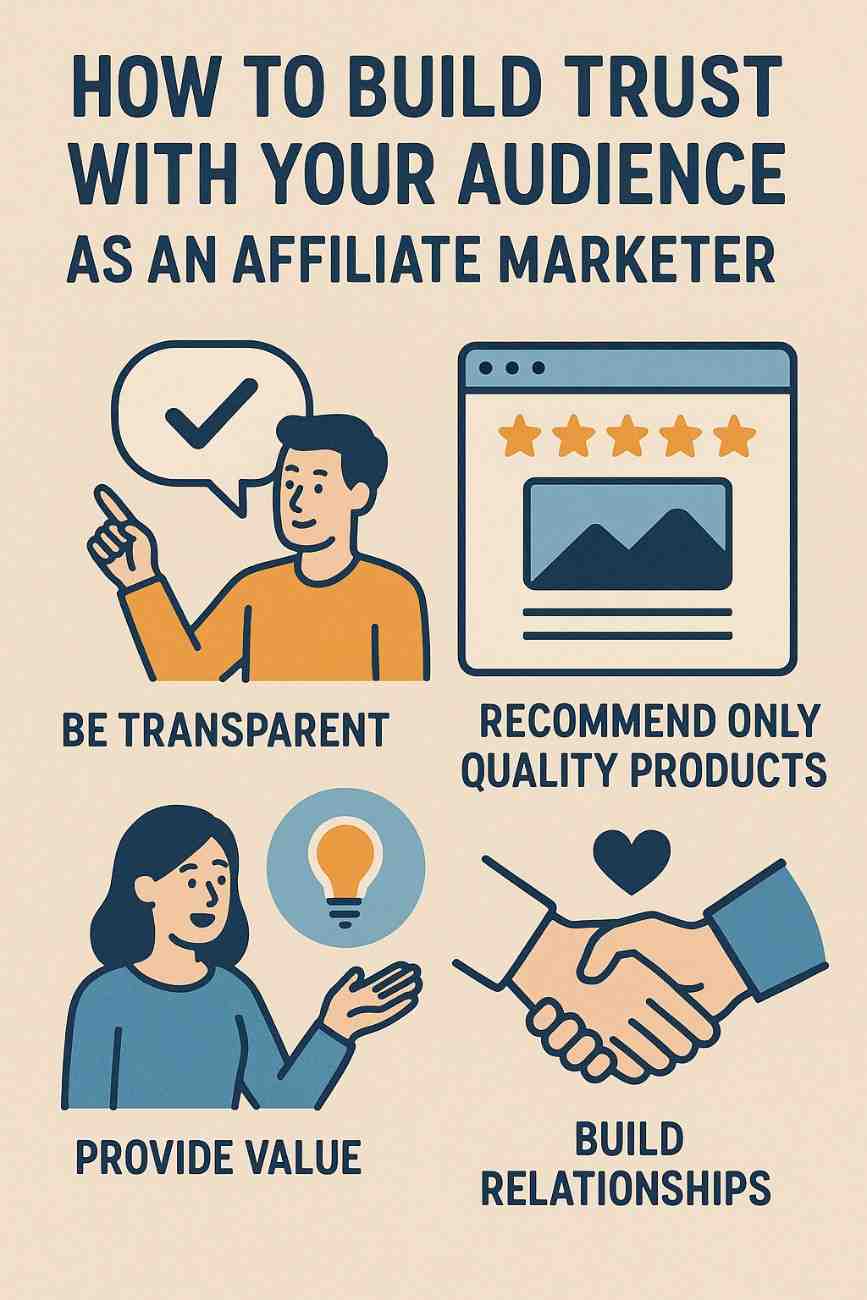
12 Proven Ways to Build Trust with Your Audience as an Affiliate
1. Be Transparent About Affiliate Relationships
Always disclose that you use affiliate links. It’s not only ethical but also legally required in many regions (like per FTC guidelines in the U.S.).
Example Disclosure:
“This post contains affiliate links, which means I may earn a small commission if you purchase through my links—at no extra cost to you. I only recommend products I truly believe in.”
When you’re upfront, you show integrity—and that builds trust.
2. Promote Products You’ve Personally Used or Tested
People can sense authenticity. When you speak from experience, your reviews and recommendations are more detailed, relatable, and credible.
If you haven’t used the product, be clear about that. You can still recommend it based on thorough research or user feedback—but don’t pretend.
3. Provide Value Before Promotion
Don’t just drop affiliate links. Surround them with value—educational content, how-tos, comparisons, or storytelling.
Examples:
-
A blog post: “How I Built a Website in 3 Days (with Bluehost)”
-
A YouTube video: “My Top 5 Productivity Tools That Changed My Workflow”
When your audience benefits from your content even without clicking, they’ll respect your work—and return for more.
4. Focus on Solving Problems, Not Selling Products
The best affiliate marketers don’t push products—they solve problems.
For instance, instead of saying:
“Buy this planner—it’s amazing!”
Say:
“If you struggle with staying focused, this planner helped me create a weekly system that actually works.”
Make it about the user’s need, not your commission.
5. Be Honest About Limitations and Drawbacks
If a product isn’t perfect, say so. In fact, pointing out downsides can make your recommendation more believable.
For example:
“The tool is great for beginners, but if you’re an advanced user, it might feel limiting.”
This balanced approach builds credibility and positions you as a trustworthy advisor—not just a promoter.
6. Create In-Depth, High-Quality Content
Shallow, generic content doesn’t inspire confidence. Go deep. Compare alternatives. Include pros and cons. Show screenshots or demonstrations.
The more effort you put in, the more your audience will respect your opinion.
7. Engage With Your Audience
Reply to comments, answer emails, and respond to questions. People trust people who care.
When you take time to connect personally—even at scale—you build a loyal community that values your voice.
8. Share Real Results or Case Studies
Show what worked for you or your clients. Walk through your journey.
Example:
“I used this budget app for 30 days—here’s what I saved.”
Real numbers, stories, and before/after comparisons establish authority and make your content memorable.
9. Build a Personal Brand, Not Just a Content Site
People follow people. Build your online identity around your values, interests, and expertise. Share glimpses of your life and why you do what you do.
If your audience knows and likes the person behind the screen, they’ll trust your recommendations even more.
10. Avoid Over-Promotion
Don’t overload every blog post, email, or video with affiliate links. Mix promotional content with purely educational, entertaining, or inspirational material.
Ratio to follow:
3 pieces of value-driven content for every 1 promotional piece.
11. Use Email Marketing to Build Deeper Relationships
Email allows you to deliver content directly, offer personalized help, and share exclusive tips or deals. It’s more intimate than social media or search.
When someone gives you their email, they’re trusting you. Use that opportunity wisely—don’t spam. Nurture with value first.
12. Choose Affiliate Programs That Align With Your Brand
Not every high-paying affiliate offer is a good fit. Promote only those that make sense for your audience.
A fitness influencer promoting cryptocurrency apps may confuse or lose trust from followers. Stick with products that your audience expects and needs.
Example: Building Trust as an Affiliate Blogger
Meet Alex, a Travel Blogger
Alex runs a blog called “WanderSmart”, where he shares travel tips, itineraries, and budget hacks. He’s an affiliate for products like:
-
Travel insurance
-
Backpacking gear
-
Hotel booking platforms
-
Language apps
Here’s how Alex builds trust:
-
✅ Transparency: Each post includes a clear disclaimer:
“This article contains affiliate links, but I only recommend tools I use on my own travels.” -
✅ Personal Use: He reviews his actual travel backpack with photos, wear-and-tear comments, and what fits inside.
-
✅ Problem-Solving Content: Instead of “Best Travel Insurance,” he writes:
“How I Saved $800 on My Trip to Spain After Losing My Bag—And Why Travel Insurance Matters.” -
✅ Email Engagement: Subscribers get a free travel checklist and weekly tips—not just promotions.
-
✅ Honest Comparisons: When reviewing hotels.com vs booking.com, he highlights strengths of each, including mobile app quality and refund policies.
As a result, his readers see him as a reliable travel buddy. They click, trust, and buy—not because of flashy marketing, but because he earned it.
Final Thoughts
Trust is the backbone of affiliate marketing. It’s not earned overnight—but once established, it becomes the most powerful asset you have.
By putting your audience first, offering genuine value, and being transparent in your promotions, you turn followers into fans—and fans into buyers. You don’t need a massive audience to succeed. You need a trusted voice in a crowded world.
So next time you publish a post, film a video, or send an email, ask yourself:
-
“Am I solving a real problem?”
-
“Would I buy this if I were my audience?”
-
“Have I earned their trust?”
If the answer is yes, the conversions will come—ethically and consistently.
Need help writing a trust-building affiliate review or setting up your first email funnel? I can guide you step-by-step! Just tell me your niche or goals.

