
Table of Contents
ToggleIntroduction
Affiliate marketing is a performance-based marketing strategy where individuals or businesses earn a commission by promoting other companies’ products or services. On the other hand, content marketing involves creating and sharing valuable, relevant content to attract and retain an audience—and ultimately, to drive profitable customer action.
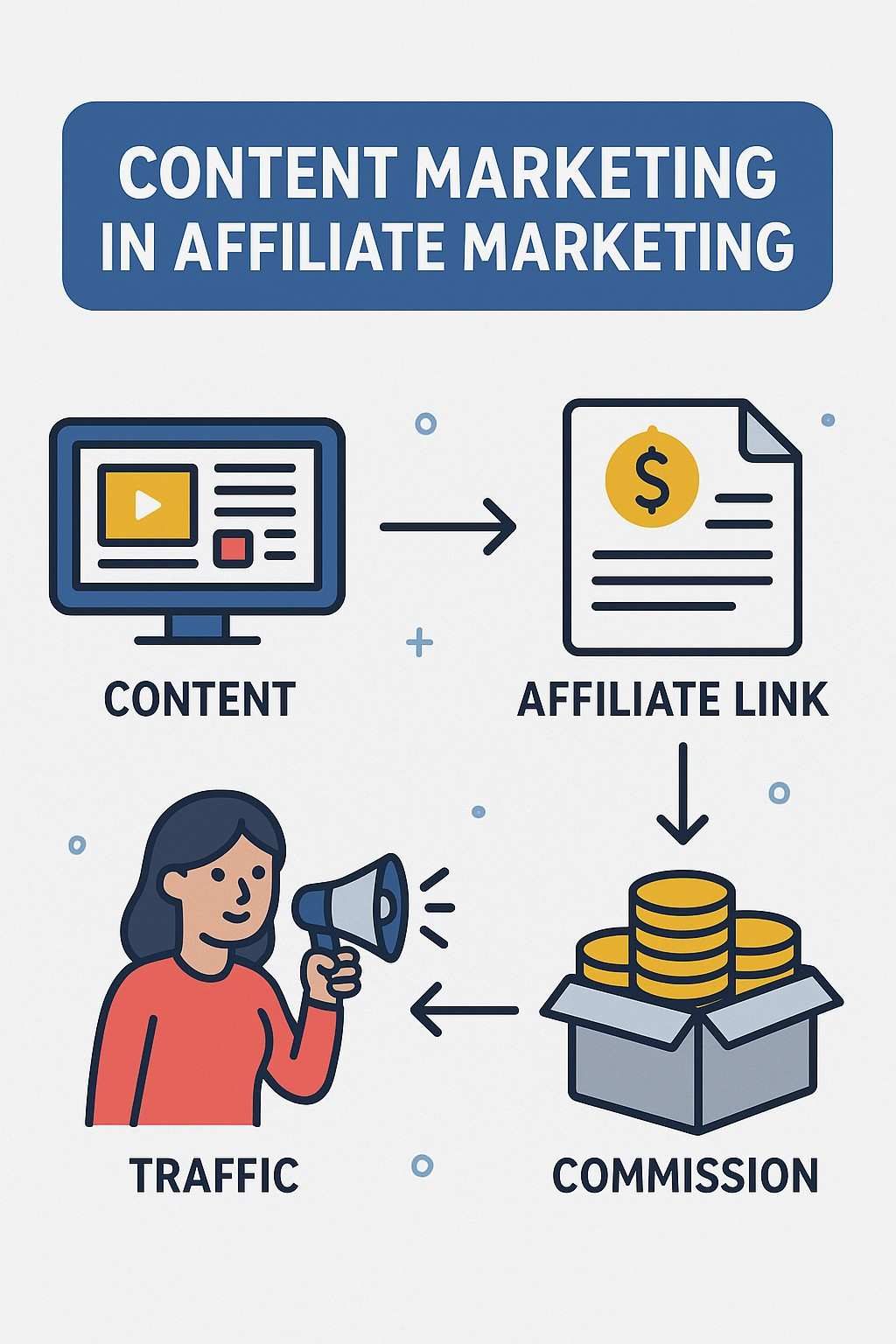
When these two powerful strategies come together, they form what is called content marketing in affiliate marketing—a long-term, trust-based approach to promoting affiliate products or services using high-quality, informative, and engaging content.
This article explores how content marketing functions in the realm of affiliate marketing, why it is so effective, and how marketers use it strategically to build trust, engage audiences, and earn sustainable income. We will also provide a real-world example for context.
Understanding Content Marketing in Affiliate Marketing
In affiliate marketing, content is more than just filler material—it’s the primary tool for educating potential buyers, building authority, establishing trust, and guiding users toward making a purchase through an affiliate link. Unlike traditional advertising that directly pushes products, content marketing aims to pull customers in by offering real value.
So, what does this look like in practice?
Here are some types of content commonly used in affiliate marketing:
-
Blog posts and articles (product reviews, comparison guides)
-
YouTube videos (how-tos, demonstrations)
-
Social media posts and reels
-
Email newsletters
-
Podcasts
-
E-books and guides
-
Webinars and live sessions
Each piece of content is crafted to solve a problem, answer a question, or fulfill a need—while subtly integrating affiliate promotions that align with the content’s theme.
Why Content Marketing Works in Affiliate Marketing
1. Builds Trust and Authority
Content marketing allows affiliate marketers to position themselves as knowledgeable experts in a specific niche. When a user finds a well-researched article, helpful video, or insightful comparison guide, they are more likely to trust the person or brand behind it.
This trust is crucial—users are far more likely to click on an affiliate link and make a purchase if they feel the recommendation is honest and backed by expertise.
2. Increases Engagement
Well-crafted content keeps the audience engaged. Whether it’s a blog post that holds attention for 5 minutes or a 10-minute YouTube tutorial, good content helps create longer user interaction, which increases the chances of conversions.
3. Improves SEO and Organic Reach
Content marketing improves search engine optimization (SEO) by targeting keywords your audience is searching for. A high-ranking article or video on Google or YouTube can drive free, organic traffic for months or even years—without spending on ads.
For example, a blog post titled “Top 10 Budget Cameras for YouTube Creators in 2025” may rank on Google and consistently attract people looking to buy cameras, making it a perfect spot to include affiliate links.
4. Supports Multiple Customer Journey Stages
Content allows you to target potential customers at different stages of the buyer’s journey:
-
Awareness stage: General informative content (e.g., “Why You Should Use Noise-Cancelling Headphones”)
-
Consideration stage: Comparisons and reviews (e.g., “Bose vs Sony Headphones – Which is Better?”)
-
Decision stage: In-depth product guides with affiliate links (e.g., “Best Deals on Sony WH-1000XM5 – Full Review and Buying Guide”)
This strategic use of content ensures you’re addressing the audience’s needs at every step, thus increasing the likelihood of conversion.
Types of Content Used in Affiliate Marketing
Let’s explore how different formats support affiliate marketing goals:
1. Blog Posts and Articles
Blogging is one of the most popular methods in affiliate content marketing. Articles allow you to write in-depth reviews, how-to guides, comparisons, and listicles.
Examples:
-
“Top 5 Web Hosting Services for Bloggers in 2025”
-
“Complete Guide to Choosing the Right Protein Supplement”
Each of these posts can include affiliate links naturally within the text or as call-to-action (CTA) buttons.
2. Video Content
YouTube videos or embedded website videos offer a dynamic way to demonstrate a product. Viewers can see how the product works, increasing trust and reducing purchase hesitation.
Examples:
-
Product unboxing and reviews
-
Tutorials (e.g., “How to Set Up a WordPress Blog Using Bluehost”)
-
Comparison videos (e.g., “iPhone vs Samsung for Vlogging – Full Review”)
Video descriptions can include affiliate links, making it easy for viewers to purchase the featured items.
3. Email Newsletters
Once you build an audience, email marketing becomes an effective channel for affiliate content. You can provide exclusive content, product updates, and promotions directly to your subscribers.
Example:
A fitness blogger might send a weekly email with workout tips and recommend affiliate products like protein powders or workout gear.
4. Social Media Content
Platforms like Instagram, Facebook, and Pinterest allow for short-form, visual content. Stories, reels, and carousel posts can highlight product features, showcase tutorials, or provide mini-reviews.
You can use trackable affiliate links via link-in-bio tools or swipe-up features (on eligible accounts).
5. E-books and Long-Form Guides
Free downloadable content like e-books or whitepapers can include affiliate links throughout the material. These guides provide in-depth value and help nurture long-term engagement.
Example:
An e-book titled “The Beginner’s Guide to Starting a Podcast” could include affiliate links for recommended microphones, software, and hosting platforms.
Real-World Example: Pat Flynn – Smart Passive Income
One of the most well-known examples of content marketing in affiliate marketing is Pat Flynn, the creator of the blog and podcast Smart Passive Income.
Pat Flynn began by blogging about his journey in online business, creating high-value content that attracted thousands of readers interested in entrepreneurship, online income, and marketing tools.
He wrote detailed posts on topics like:
-
“How to Start a Podcast”
-
“Tools I Use for Online Business”
-
“Why I Switched to ConvertKit (Email Marketing Platform)”
In each post, he transparently disclosed affiliate links, explained why he recommended the tools, and often included step-by-step tutorials or free templates. His readers trusted him because of his transparency, expertise, and authenticity.
By combining blogs, podcasts, YouTube videos, and email marketing, Pat Flynn turned his content into a multi-million-dollar affiliate marketing empire—largely driven by value-first content.
Best Practices for Content Marketing in Affiliate Marketing
To succeed with content-driven affiliate marketing, here are some best practices:
1. Focus on Value, Not Just Sales
Content should prioritize helping the user, not just selling a product. If your content solves a problem, the sale will naturally follow.
2. Be Honest and Transparent
Disclose affiliate relationships openly. Honesty builds trust and is often required by laws and platforms (e.g., FTC guidelines).
3. Choose Products Relevant to Your Niche
Only promote products that align with your audience’s interests and your content. Relevance improves conversions and maintains credibility.
4. Use Strong Calls-to-Action (CTAs)
Tell readers or viewers exactly what to do next—click the link, try the product, or sign up for a trial.
5. Track and Optimize Performance
Use affiliate dashboards and link tracking tools to monitor performance. Optimize based on what content performs best.
Conclusion
Content marketing in affiliate marketing is one of the most powerful, sustainable ways to generate income online. By delivering valuable content that informs, educates, or entertains, affiliate marketers can build trust with their audience and seamlessly guide them toward relevant products or services.
This strategy is not about selling—it’s about serving your audience. When done right, content marketing builds a loyal community, generates consistent traffic, and creates multiple income streams, all while promoting products you genuinely believe in.
Whether through blogs, videos, emails, or social media, content is the bridge that connects your audience’s problems to the solutions offered by affiliate products—and that’s what makes this approach both ethical and effective in the long run.

