
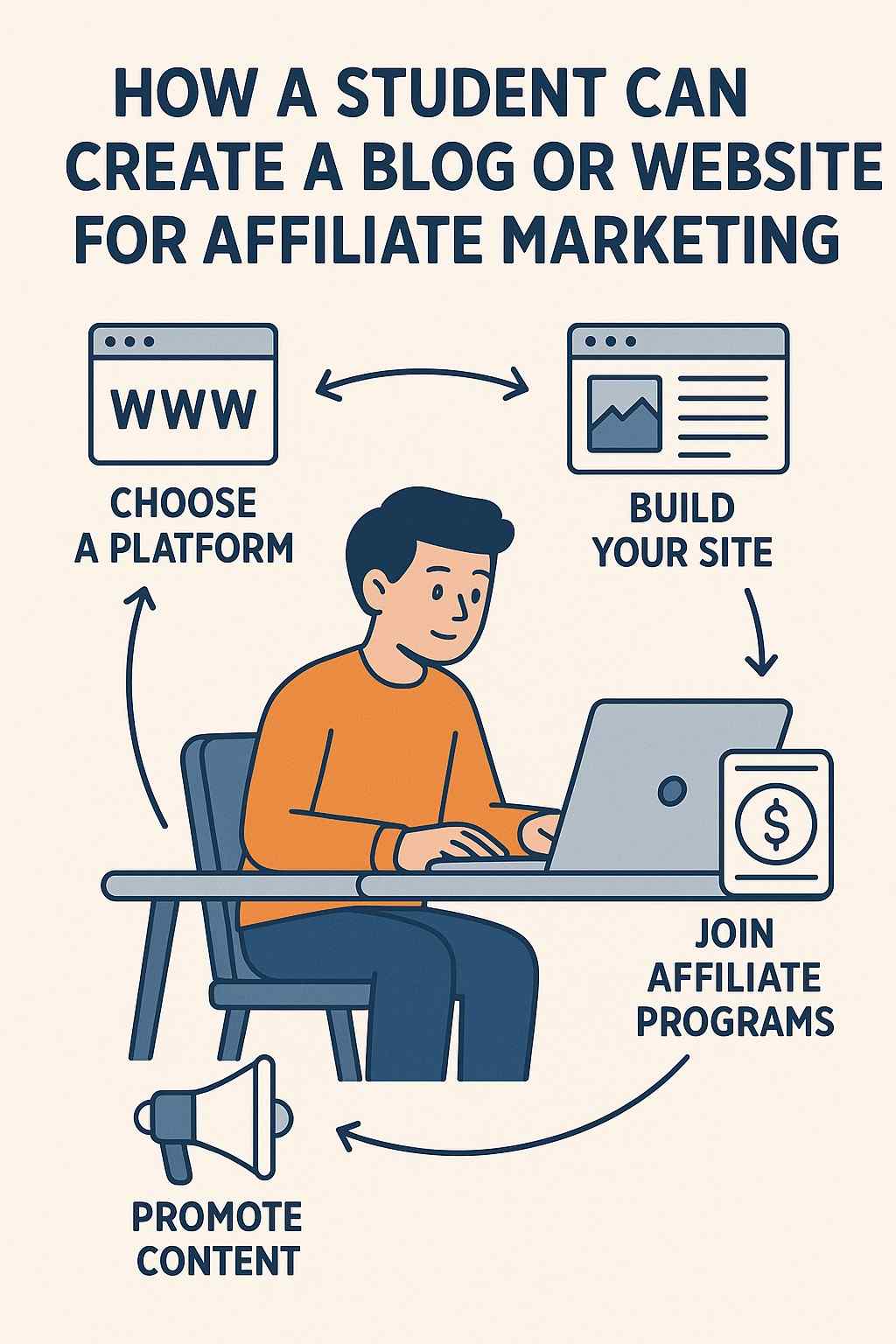
Affiliate marketing is one of the most powerful and accessible ways for students to earn passive income online. With limited time and often limited resources, students can still create a blog or website that generates affiliate commissions by promoting useful products or services. This strategy not only builds a side income but also helps students develop valuable digital skills like writing, SEO, design, and online business management.
In this in-depth guide, we will walk through how a student can create a successful affiliate marketing blog or website step-by-step — even without technical skills or much money. We’ll also provide a real-world example to show how students can implement this strategy effectively.
Why Should Students Consider Affiliate Marketing Through Blogging?
Before diving into the “how,” let’s understand why this is a great option for students.
✅ Benefits:
-
Low startup cost: You can start with as little as ₹1,000–₹3,000 per year.
-
Passive income: Earn money even while focusing on studies.
-
Skill development: Learn content creation, SEO, web design, and marketing.
-
Flexible schedule: Work on your blog when time permits.
-
Long-term asset: Your website continues to grow and earn over time.
Step-by-Step Guide for Students to Start a Blog for Affiliate Marketing
Step 1: Choose a Profitable Niche
Your niche is the specific topic or category your blog will focus on. A well-defined niche helps you attract a loyal audience and find relevant affiliate products to promote.
📌 Tips for Choosing a Niche:
-
Pick something you’re interested in or good at.
-
Ensure there are affiliate products in that niche.
-
Check if people are actively searching for content in that area.
🔍 Popular Student-Friendly Niches:
-
Tech gadgets and apps
-
Fitness and wellness
-
Study tips and productivity
-
Budget travel
-
Fashion and lifestyle
-
Online learning and eBooks
-
Gaming and game accessories
🎯 Example:
A student passionate about budget travel chooses to create a blog called “The Broke Backpacker’s Guide”, focused on affordable travel tips for students and young adults.
Step 2: Buy a Domain and Hosting
A blog needs a domain name (your web address) and hosting (where your site’s files live).
✅ Domain Name Tips:
-
Keep it short, memorable, and niche-related
-
Use .com, .in, or .net extensions
-
Examples: StudentFitTips.com, TravelOnPocket.com
✅ Hosting Providers for Beginners:
-
Bluehost (comes with free domain, beginner-friendly)
-
Hostinger
-
Namecheap
-
SiteGround
Budget: ₹2,000–₹4,000/year (includes domain + hosting)
Step 3: Install WordPress
Most hosting providers offer 1-click WordPress installation, which lets you build your blog without coding.
✅ Why WordPress?
-
Beginner-friendly
-
1000s of free themes and plugins
-
SEO optimized
-
Flexible for all content types
Once installed, you’ll get access to the WordPress dashboard where you can customize your website, create pages, and write blog posts.
Step 4: Choose a Theme and Customize Your Blog
Choose a responsive, fast-loading, and clean theme that fits your niche.
Free WordPress Themes:
-
Astra
-
GeneratePress
-
OceanWP
-
Neve
Customize your blog to include:
-
Homepage
-
About Page
-
Contact Page
-
Blog Page
-
Privacy Policy and Disclaimer
Install plugins like:
-
Yoast SEO – for search engine optimization
-
Pretty Links – to manage affiliate links
-
WP Forms – to create contact forms
Step 5: Sign Up for Affiliate Programs
Find affiliate programs relevant to your niche. You can sign up directly on brand websites or through affiliate networks.
🔗 Popular Affiliate Networks:
-
Amazon Associates (for physical products)
-
ShareASale (lifestyle, fashion, tools)
-
Impact (SaaS and digital tools)
-
ClickBank (digital courses, eBooks)
-
Hostinger/Bluehost (for tech/hosting-related blogs)
Once approved, you’ll get a unique affiliate link to insert into your blog posts.
🎯 Example:
The student travel blogger signs up for:
-
Amazon Associates to promote travel gear
-
Booking.com Affiliate Program for hotel recommendations
-
SafetyWing for student travel insurance
Step 6: Write High-Quality, SEO-Friendly Blog Posts
Now that your site is set up, it’s time to publish valuable content that attracts readers and encourages affiliate clicks.
📝 Blog Post Ideas:
-
“Top 5 Budget Hostels in Goa for Students”
-
“10 Travel Essentials Under ₹1,000 on Amazon”
-
“How I Traveled to Manali for ₹5,000 – Complete Guide”
-
“Best Student Travel Insurance for 2025 (Compared)”
Use keyword research tools like:
-
Google Keyword Planner
-
Ubersuggest
-
AnswerThePublic
✍ Content Writing Tips:
-
Start with a catchy title
-
Use subheadings (H2/H3)
-
Add images and product links
-
Be honest in reviews — list pros and cons
-
Insert your affiliate links naturally
Step 7: Promote Your Blog
Writing isn’t enough — you need to drive traffic to your blog.
Free Promotion Strategies:
-
Share posts on WhatsApp, Facebook groups, and student forums
-
Create Pinterest pins for blog posts
-
Join Quora and answer relevant questions with links
-
Use Instagram Reels or Stories to promote new content
-
Collaborate with other student bloggers
Long-Term Promotion:
-
Focus on SEO to get Google traffic
-
Build an email list using tools like MailerLite
-
Start a YouTube channel that links back to your blog
Step 8: Build Trust with Your Audience
People will only buy through your affiliate links if they trust your recommendations.
How to Build Trust:
-
Disclose affiliate links transparently
-
Write honest, experience-based reviews
-
Share both positive and negative aspects
-
Show proof of using the product (images or videos)
-
Don’t spam — focus on helping, not just selling
Add a line like: “This post contains affiliate links. If you make a purchase, I may earn a small commission at no extra cost to you.”
Step 9: Track Your Performance and Optimize
Use tracking tools to monitor how your blog is performing.
Tools to Use:
-
Google Analytics – for traffic insights
-
Google Search Console – for SEO monitoring
-
Affiliate Dashboards – to track clicks and sales
Analyze which posts get traffic and which links convert. Then:
-
Update and improve popular posts
-
Write more content on similar topics
-
Test different affiliate products
Step 10: Be Consistent and Patient
Affiliate marketing is not a get-rich-quick scheme. It may take 3–6 months to start earning consistent commissions.
Stay Consistent:
-
Post 1–2 quality blogs per week
-
Promote each post across channels
-
Respond to comments and emails
-
Keep learning from other bloggers or courses
✅ Real-Life Student Blog Example
Student Name: Priya Sharma
Niche: Budget Travel for Indian Students
Blog Name: WanderOnABudget.in
Setup:
-
Hosting: Hostinger
-
Platform: WordPress with Astra theme
-
Affiliate Programs:
-
Amazon Associates (travel gear)
-
Booking.com (hotels)
-
ClickBank (travel eBooks)
-
SafetyWing (travel insurance)
-
Popular Posts:
-
“Best Travel Backpacks Under ₹2,000 – Reviewed”
-
“Student Guide to Cheap Flights in India”
-
“Top Hostels in Rishikesh for Solo Travelers”
Monetization:
-
Average monthly traffic: 5,000
-
Monthly income (after 6 months): ₹6,500–₹10,000
Priya also began receiving collaboration requests from hostel owners and brands offering free stays and reviews.
Conclusion
Starting a blog for affiliate marketing is one of the smartest ways for students to earn online while building long-term digital skills. With minimal investment and a bit of creativity, students can create a niche website that serves others and earns money through affiliate commissions.
Final Takeaways:
-
Choose a niche that matches your passion and audience interest
-
Set up a professional-looking WordPress site
-
Join affiliate programs relevant to your niche
-
Write helpful, keyword-rich content with your affiliate links
-
Promote consistently and build trust with your readers
-
Track performance and optimize based on results
Success won’t come overnight, but with consistency, ethical practices, and smart promotion, students can build a blog that not only makes money but opens doors to career opportunities in digital marketing, content creation, and entrepreneurship.
Your blog is not just a website — it’s a personal brand and a potential future business. Start building it today!

