
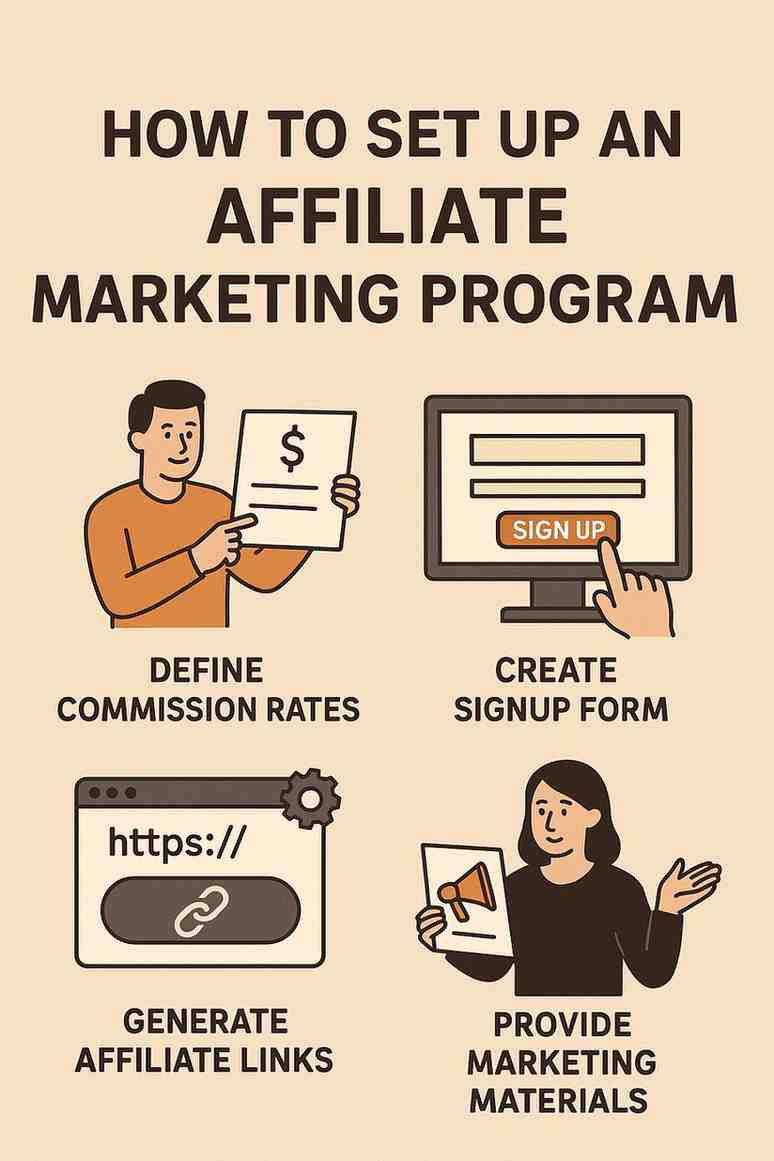
Affiliate marketing is a powerful strategy that allows merchants to expand their reach, drive sales, and build brand awareness by partnering with affiliates who promote their products or services in exchange for commissions. For merchants, setting up an affiliate marketing program involves careful planning, technical implementation, and ongoing management to ensure success. This process requires defining goals, selecting the right platform, recruiting affiliates, establishing commission structures, and providing support to maximize results. This essay explores the step-by-step process of setting up an affiliate marketing program, its benefits, challenges, and best practices, followed by a practical example to illustrate its implementation.
Step 1: Define Goals and Objectives
The first step in setting up an affiliate marketing program is to establish clear goals and objectives. These guide the program’s structure and help measure its success.
Key Actions:
- Identify Desired Outcomes: Merchants should determine whether the program aims to increase sales, generate leads, boost brand awareness, or acquire subscribers for a recurring revenue model (e.g., SaaS subscriptions).
- Set Key Performance Indicators (KPIs): Common KPIs include the number of affiliate-driven sales, conversion rates, cost per acquisition (CPA), or return on investment (ROI). For example, a merchant might aim for a 10% increase in monthly sales through affiliates.
- Define Target Audience: Understand the customer demographic (e.g., age, interests, location) to recruit affiliates who can effectively reach them.
- Budget Planning: Allocate funds for commissions, software platforms, and promotional materials. Ensure the budget aligns with expected revenue from affiliate sales.
Significance: Clear goals align the program with the merchant’s broader business objectives and provide a framework for evaluating performance.
Challenges: Misaligned goals (e.g., focusing solely on sales volume without considering profitability) can lead to inefficient spending or poor affiliate partnerships.
Step 2: Choose an Affiliate Program Structure
Merchants must decide whether to run an in-house affiliate program or use an affiliate network, as this choice impacts costs, control, and scalability.
Key Actions:
- In-House Program: Develop a proprietary affiliate system using software like AffiliateWP or Post Affiliate Pro. This offers full control over tracking, commissions, and affiliate relationships but requires technical expertise and higher upfront costs.
- Affiliate Network: Partner with established networks like ShareASale, CJ Affiliate, or Rakuten Advertising. These platforms handle tracking, payments, and affiliate recruitment for a fee (e.g., setup costs or a percentage of commissions).
- Hybrid Approach: Combine an in-house program for key affiliates with a network for broader reach.
- Tracking Technology: Implement tracking solutions (e.g., cookies, server-side tracking) to attribute sales accurately. Ensure compliance with privacy regulations like GDPR or CCPA.
Significance: The structure determines the program’s scalability, ease of management, and ability to attract quality affiliates.
Challenges: In-house programs require significant technical resources, while networks charge fees that reduce profitability. Merchants must balance control with convenience.
Step 3: Set Commission Structures and Policies
A compelling commission structure attracts affiliates and incentivizes performance, while clear policies ensure transparency and fairness.
Key Actions:
- Determine Commission Rates: Offer competitive rates based on industry standards (e.g., 5–20% for e-commerce, 20–50% for digital products or subscriptions). For recurring services, consider recurring commissions (e.g., 30% of monthly fees).
- Tiered Commissions: Encourage higher performance by offering increased rates for top-performing affiliates (e.g., 10% for 1–10 sales, 15% for 11+ sales per month).
- Set Cookie Duration: Decide how long tracking cookies remain active (e.g., 30, 60, or 90 days). Longer durations increase affiliate earnings potential but may raise costs.
- Establish Policies: Define terms for commission eligibility (e.g., excluding discounted items), payment schedules (e.g., monthly), minimum payout thresholds (e.g., $50), and anti-fraud measures.
- Compliance Requirements: Mandate affiliates to disclose their affiliate status per FTC guidelines and prohibit unethical practices like cookie stuffing.
Significance: Attractive commissions and clear policies build trust and motivate affiliates to prioritize the merchant’s products.
Challenges: Overly generous commissions can erode profits, while low rates may deter affiliates. Merchants must also monitor for fraudulent activities that inflate commissions.
Step 4: Develop Affiliate Resources and Support
Providing affiliates with the tools and support they need is crucial for driving effective promotions and fostering long-term partnerships.
Key Actions:
- Create Marketing Materials: Supply banners, product images, email templates, and sample social media posts to simplify affiliate promotions. For example, a merchant selling fitness equipment might provide high-quality images of treadmills and pre-written tweets.
- Build an Affiliate Dashboard: Offer a user-friendly interface where affiliates can access links, track performance, and view earnings. Networks like ShareASale provide this, but in-house programs require custom development.
- Provide Training and Guidance: Offer webinars, guides, or one-on-one support to educate affiliates on the product and best promotional practices.
- Offer Incentives: Introduce bonuses for top performers (e.g., $100 for 50 sales in a month) or exclusive discounts for affiliates to share with their audiences.
Significance: Robust resources empower affiliates to promote effectively, increasing conversions and program success.
Challenges: Creating high-quality materials requires time and investment. Merchants must also balance support without overwhelming their team.
Step 5: Recruit and Onboard Affiliates
Recruiting the right affiliates—those with relevant audiences and strong promotional skills—is critical to the program’s success.
Key Actions:
- Identify Potential Affiliates: Target bloggers, influencers, YouTubers, or niche websites aligned with the merchant’s audience. Use tools like BuzzSumo or X searches to find creators in the niche.
- Outreach and Recruitment: Contact potential affiliates via email, social media, or affiliate networks, highlighting commission rates, product benefits, and support offered.
- Streamline Onboarding: Create a simple signup process with clear instructions on accessing links, tracking, and program terms. Approve affiliates manually or automatically based on criteria (e.g., website quality, audience size).
- Build Relationships: Engage with affiliates through newsletters, exclusive offers, or affiliate events to foster loyalty.
Significance: Quality affiliates drive targeted traffic and conversions, amplifying the program’s reach and effectiveness.
Challenges: Attracting high-performing affiliates in competitive niches can be difficult. Merchants may also receive low-quality applications, requiring careful vetting.
Step 6: Launch and Promote the Program
Once the program is set up, launching and promoting it ensures affiliates are aware and motivated to join.
Key Actions:
- Announce the Program: Share the launch via the merchant’s website, social media, email lists, and industry forums. For example, a post on X might read, “Join our new affiliate program and earn 20% commissions on every sale! Sign up at [link].”
- Leverage Existing Channels: Promote the program to existing customers or partners who may become affiliates.
- Collaborate with Networks: If using an affiliate network, leverage their marketplace to attract affiliates.
- Run Promotions: Offer limited-time bonuses or increased commissions to incentivize early signups.
Significance: A strong launch generates momentum and attracts initial affiliates, setting the program up for success.
Challenges: Low initial interest can slow growth, especially for lesser-known brands. Merchants must invest in marketing to gain traction.
Step 7: Monitor, Optimize, and Scale
Ongoing management and optimization ensure the program remains effective and profitable over time.
Key Actions:
- Track Performance: Use affiliate software or network dashboards to monitor clicks, conversions, and commissions. Identify top-performing affiliates and content types.
- Optimize Strategies: Adjust commission rates, cookie durations, or promotional materials based on performance data. For example, increase commissions for high-ticket items if conversions are low.
- Engage Affiliates: Regularly communicate with affiliates via newsletters or one-on-one check-ins to share updates, new products, or incentives.
- Scale the Program: Recruit more affiliates, expand into new niches, or introduce new products to increase revenue. For example, a SaaS merchant might add a new tool to their affiliate offerings.
- Prevent Fraud: Monitor for suspicious activity (e.g., unusually high click rates) and implement fraud detection tools.
Significance: Continuous optimization maximizes ROI and sustains long-term growth, while strong affiliate relationships drive loyalty.
Challenges: Managing a growing affiliate base can be resource-intensive. Fraud or underperforming affiliates may require corrective action.
Benefits of an Affiliate Marketing Program
- Cost-Effective Growth: Merchants pay only for results, minimizing financial risk.
- Expanded Reach: Affiliates tap into new audiences, increasing brand visibility.
- Scalability: Programs can grow with minimal additional investment, leveraging affiliates’ efforts.
- Performance-Driven: Aligns with digital marketing’s focus on measurable outcomes.
Challenges of Setting Up an Affiliate Program
- Initial Investment: Building or joining a program requires upfront costs for software, networks, or marketing.
- Affiliate Quality: Poor-quality affiliates (e.g., spammers) can harm brand reputation.
- Technical Complexity: In-house programs require robust tracking and payment systems.
- Competition: Standing out in crowded niches requires competitive commissions and strong branding.
Example of Setting Up an Affiliate Marketing Program
Scenario: “FitGear,” a company selling home fitness equipment, wants to launch an affiliate program to boost sales of its $500 treadmills and $200 resistance bands. The company aims to increase monthly revenue by 15% through affiliate-driven sales.
Step-by-Step Implementation:
- Define Goals:
- FitGear sets a goal to generate $10,000 in monthly affiliate sales, targeting fitness enthusiasts and home gym builders. KPIs include 20 monthly sales and a 5% conversion rate from affiliate clicks.
- Choose Program Structure:
- FitGear joins ShareASale to leverage its affiliate network, avoiding the complexity of an in-house system. The setup fee is $500, with a 10% commission fee to ShareASale.
- Set Commission Structure:
- FitGear offers a 10% commission on all sales (e.g., $50 per treadmill, $20 per resistance band) with a 60-day cookie duration. Payments are monthly, with a $50 minimum threshold.
- Policies prohibit affiliates from using paid ads to bid on FitGear’s brand name to avoid competition with their own campaigns.
- Develop Resources:
- FitGear creates banners, product images, and a video showcasing treadmill features. They provide a guide on “How to Promote Fitness Equipment” and a ShareASale dashboard for tracking.
- They offer a $100 bonus for affiliates who drive 10 sales in the first month.
- Recruit Affiliates:
- FitGear identifies fitness bloggers, YouTubers, and Instagram influencers via BuzzSumo and X searches. They email 50 potential affiliates, offering a 12% commission for the first three months as an incentive.
- The onboarding process includes a simple ShareASale signup and a welcome email with resources.
- Launch and Promote:
- FitGear announces the program on their website, X account, and email list, sharing, “Earn 10% commissions with FitGear’s new affiliate program! Join now at ShareASale.”
- They offer a 20% discount code for affiliates to share, increasing conversions.
- Monitor and Optimize:
- After three months, FitGear tracks 15 affiliates driving 30 treadmill sales ($15,000) and 50 resistance band sales ($10,000), generating $25,000 in revenue and paying $2,500 in commissions.
- Top-performing affiliates receive personalized emails with additional bonuses, while underperformers are offered training. FitGear adjusts commissions to 12% for treadmills to boost sales.
Analysis: FitGear’s program leverages ShareASale’s infrastructure to minimize setup complexity, while targeted recruitment and resources drive results. The program exceeds the $10,000 revenue goal, demonstrating the power of a well-executed affiliate strategy.
Conclusion
Setting up an affiliate marketing program requires strategic planning, from defining goals to recruiting affiliates and optimizing performance. By choosing the right structure, offering competitive commissions, and providing robust support, merchants can build a program that drives sales and brand growth. Challenges like technical complexity and affiliate quality must be managed proactively to ensure success. The FitGear example demonstrates how a merchant can implement a program using an affiliate network, achieving measurable results through targeted recruitment and resources. Within the digital marketing ecosystem, affiliate programs complement other channels, offering a cost-effective, scalable way to reach new audiences and achieve business objectives.

