
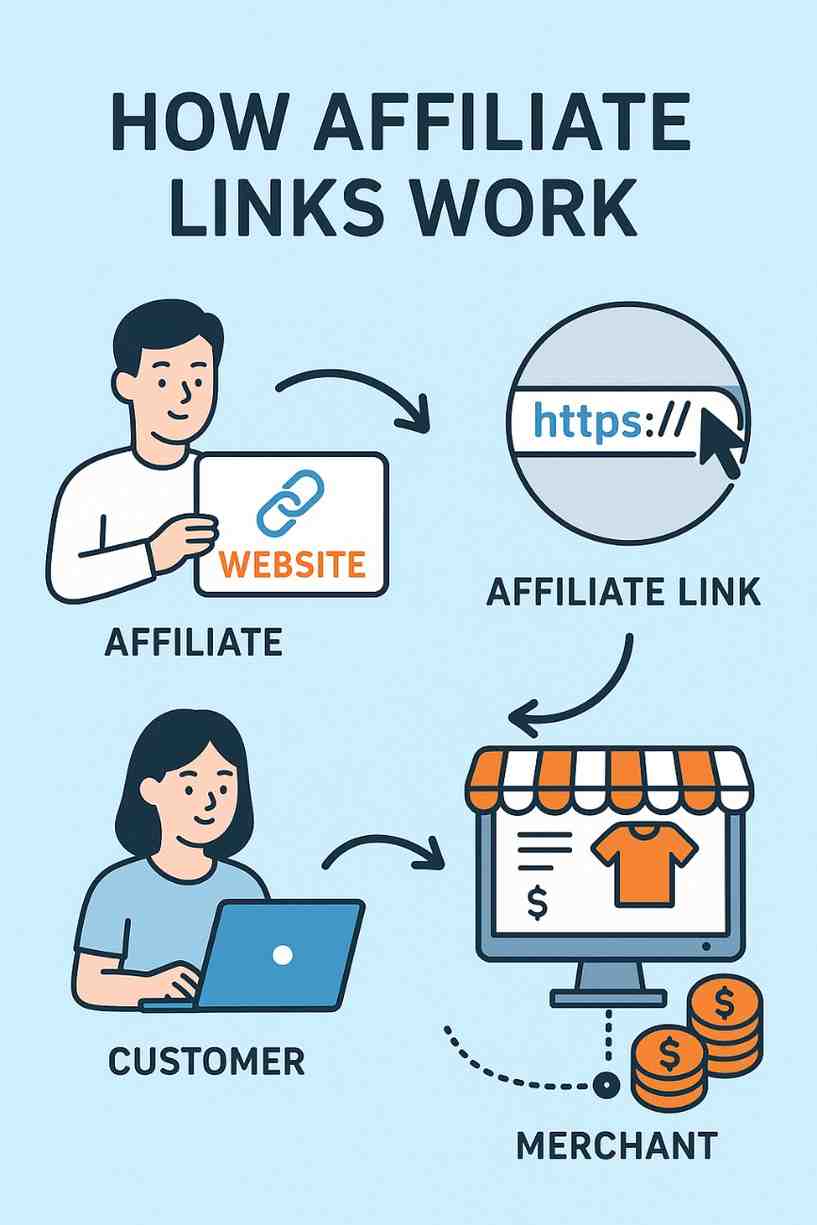
Affiliate marketing has become one of the most effective and widely used strategies in digital advertising. At the core of this system lies the concept of affiliate links — specially formatted URLs that allow businesses to track the performance of their marketing partners, also known as affiliates. These links ensure that affiliates are credited for their referrals and compensated accordingly.
In this detailed guide, we’ll explore how affiliate links work, how tracking is done, the technologies involved, and the practical application of affiliate link tracking through a real-world example.
Table of Contents
Toggle1. What Is an Affiliate Link?
An affiliate link is a unique URL that contains an identifier (typically an affiliate ID or tracking code) used to track the activity of users referred by a specific affiliate. This link is generated when an affiliate joins an affiliate program and promotes a product, service, or brand.
Whenever a user clicks on this affiliate link and completes a specific action (such as making a purchase or signing up), the affiliate is rewarded based on the agreed-upon commission structure — which may be CPA (Cost Per Action), CPL (Cost Per Lead), or CPS (Cost Per Sale).
Structure of an Affiliate Link:
Affiliate links usually look something like this:
https://www.example.com/product?ref=affiliate123
Or more complex:
https://www.example.com/product?aff_id=98765&utm_source=affiliate&utm_campaign=sale2025
In this URL:
-
aff_id=98765is the unique affiliate ID. -
utm_source=affiliateandutm_campaign=sale2025are used for additional tracking via Google Analytics.
2. How Do Affiliate Links Work?
Affiliate links function by tracking the user’s behavior from the moment they click the link to the moment they complete an action (e.g., purchase, download, registration). The process involves several steps, which work seamlessly in the background using tracking technology.
Step-by-Step Process:
Step 1: Affiliate Joins a Program
The affiliate signs up with a company’s affiliate program or an affiliate network like Amazon Associates, ShareASale, or ClickBank. Upon approval, the affiliate receives access to a dashboard where they can generate their unique affiliate links for various products or services.
Step 2: Affiliate Promotes the Link
The affiliate embeds their affiliate links into content — such as blog articles, social media posts, YouTube videos, emails, or banner ads — and shares it with their audience.
Step 3: User Clicks the Link
When a consumer clicks on the affiliate link:
-
They are redirected to the advertiser’s website.
-
Simultaneously, the system captures the affiliate’s ID and stores a tracking cookie in the user’s browser.
Step 4: Tracking Begins
The tracking cookie collects information such as:
-
Affiliate ID
-
Time and date of the click
-
Campaign ID (if applicable)
-
Source of traffic
-
User’s IP address or device
The cookie duration (or “cookie window”) determines how long the affiliate will be credited for a purchase. It typically ranges from 24 hours to 90 days — though some programs offer lifetime cookies.
Step 5: User Converts
If the user completes the desired action within the cookie window (e.g., buying a product, signing up for a service), the system attributes the conversion to the affiliate who referred them.
Step 6: Affiliate Gets Paid
The affiliate platform or merchant tracks the transaction and rewards the affiliate based on the commission structure. This can be a flat fee or a percentage of the sale.
3. Technologies Used for Affiliate Tracking
Modern affiliate marketing relies on several technologies to accurately track user activity and ensure transparent reporting:
a. Cookies
Cookies are small pieces of data stored in the user’s browser when they click an affiliate link. The cookie contains the affiliate’s ID and other relevant data. If the user returns to the website and completes a conversion within the cookie period, the affiliate is credited.
-
Example: A cookie duration of 30 days means if a user clicks the link on June 1 and purchases on June 25, the affiliate still earns a commission.
b. Tracking Pixels
Tracking pixels are tiny, invisible images embedded in web pages or emails. When a user visits a page or completes an action, the pixel “fires” and notifies the server that a specific activity occurred.
Used primarily for:
-
Page views
-
Conversions
-
Email opens
c. Postback URLs (Server-to-Server Tracking)
This method doesn’t rely on browser cookies. Instead, it uses unique click IDs and passes them directly between servers. It’s more accurate and less affected by browser restrictions or cookie blocking.
-
Commonly used in mobile app installs and CPA networks.
d. UTM Parameters
UTM parameters are tags added to the end of a URL for tracking in tools like Google Analytics. While not directly tied to commission tracking, they help affiliates and advertisers analyze traffic sources, campaign performance, and user behavior.
4. Affiliate Link Redirection and Cloaking
To make affiliate links more user-friendly and secure, many affiliates use link cloaking or URL shortening. This practice masks the affiliate ID behind a cleaner and more trustworthy URL.
Original Link:
https://www.vendor.com/product?affiliate_id=89293&campaign=sale50
Cloaked Link:
https://www.mywebsite.com/recommends/productname
Benefits of cloaking:
-
Enhances credibility and aesthetics
-
Prevents affiliate link hijacking or commission theft
-
Helps track link clicks through your own system
Plugins like Pretty Links, ThirstyAffiliates, and Bitly are popular tools for this.
5. Cookie Duration: Why It Matters
Affiliate programs differ in terms of how long they store cookies. This window determines how long an affiliate has to earn a commission after the link is clicked.
Types of Cookie Durations:
-
Session-Based Cookies: Only track users during the active session. If the user leaves and comes back later, no commission.
-
24-Hour Cookies: Amazon uses this model. If the user doesn’t purchase within 24 hours, the cookie expires.
-
30-90 Days Cookies: Common among SaaS and eCommerce platforms.
-
Lifetime Cookies: If a user ever buys from the advertiser after clicking your link, you earn commission — forever.
The longer the cookie life, the better for affiliates, as it increases the chance of earning commissions.
6. Example: Affiliate Link in Real Life
Let’s look at a real-world example involving all elements of affiliate link tracking.
Scenario: Blogger Promotes a Web Hosting Service
-
Affiliate: Priya is a tech blogger who writes tutorials on building websites.
-
Advertiser: Bluehost offers an affiliate program with ₹5,000 per sale.
-
Tracking Method: Cookie-based with 60-day duration.
Step-by-Step Process:
-
Priya signs up for Bluehost’s affiliate program and gets this link:
https://www.bluehost.in/track?affid=priya123
-
She writes a blog titled “Best Hosting for WordPress in 2025” and embeds the affiliate link.
-
A reader, Ramesh, clicks on the link but doesn’t buy immediately.
-
The tracking system sets a 60-day cookie on Ramesh’s browser.
-
Two weeks later, Ramesh returns to Bluehost directly and purchases a hosting plan.
-
Because the original click is still within the cookie window, Priya is credited for the sale.
-
Priya receives ₹5,000 in her affiliate dashboard.
7. Tools and Platforms for Managing Affiliate Links
Affiliate tracking can be managed using either in-house software or third-party affiliate networks.
Popular Affiliate Networks:
-
ShareASale
-
CJ Affiliate (Commission Junction)
-
Rakuten Advertising
-
Impact
-
ClickBank
In-House Programs:
Brands like Amazon, Flipkart, Shopify, and Hostinger manage their own affiliate programs using custom-built or licensed software.
These platforms provide:
-
Dashboard for affiliates
-
Tracking reports
-
Conversion and payout summaries
-
Marketing creatives and banners
8. Challenges in Affiliate Link Tracking
While affiliate link tracking is efficient, it’s not immune to challenges:
a. Cookie Blocking
Modern browsers like Safari and Firefox block third-party cookies by default. This can disrupt tracking unless server-side methods are used.
b. Ad Blockers
Some users use ad blockers that prevent tracking pixels or redirects from loading.
c. Cross-Device Attribution
A user may click a link on mobile and complete the purchase on a desktop — potentially breaking the tracking chain.
d. Link Hijacking
Competitors or unscrupulous individuals may replace or steal affiliate IDs to earn unearned commissions.
Conclusion
Affiliate links are the backbone of affiliate marketing. They enable precise tracking, attribution, and compensation for referrals. Through cookies, pixels, and server-to-server integrations, these links allow businesses to monitor affiliate-driven traffic and conversions with remarkable accuracy.
Whether it’s a blog, YouTube channel, or Instagram page, affiliate links make it possible for creators to monetize their influence — while allowing businesses to grow through a low-risk, performance-based model.
Understanding how affiliate links work and how they are tracked is essential for anyone looking to succeed in the affiliate marketing industry — ensuring transparency, accountability, and mutual benefit for both advertisers and affiliates.

