
Introduction
Affiliate marketing is a widely adopted digital strategy where individuals or companies earn commissions by promoting and selling products or services created by other businesses. As affiliate marketing has grown in popularity, so have the tactics used to maximize conversions and profits. Among these tactics, one controversial and often misunderstood method is cloaking.
Cloaking is a technique that has legitimate uses but also a history of misuse. It walks a fine line between optimization and deception, depending on how it’s implemented. In the world of affiliate marketing, cloaking can be both a helpful tool and a risky shortcut. In this article, we’ll explain what cloaking is, why affiliate marketers sometimes use it, the advantages and ethical implications, and include an appropriate example to illustrate its role in affiliate campaigns.
What Is Cloaking in Affiliate Marketing?
Cloaking in affiliate marketing refers to the practice of disguising or masking the destination URL of an affiliate link to make it appear cleaner, more trustworthy, or different from the actual tracking link. This is done by redirecting users to an affiliate product page through a custom URL or by using scripts or plug-ins to hide the true structure of the link.
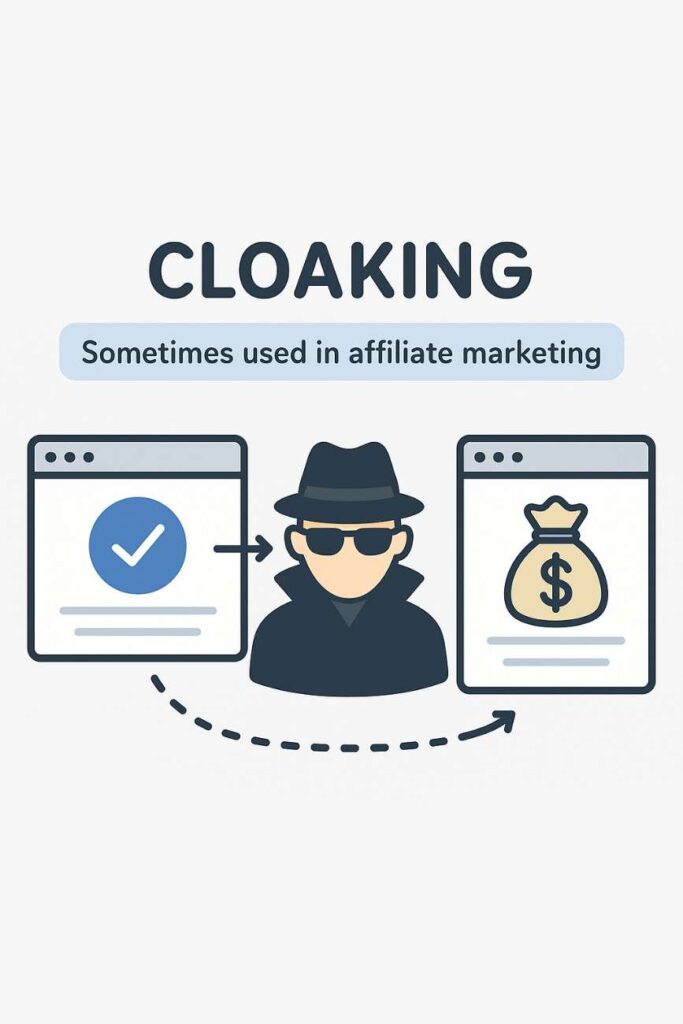
While this may sound simple or even innocent, cloaking can also involve advanced tactics where the content shown to users is different from what is shown to search engines or advertising networks—raising questions of transparency and compliance.
Types of Cloaking in Affiliate Marketing
There are two main categories of cloaking:
1. URL Cloaking (Link Masking or Pretty Links) – Common and Mostly Legitimate
This is the most widely used and often accepted form of cloaking. Here, an affiliate uses a redirection or link-shortening technique to mask a long or unattractive affiliate URL.
For example:
-
Original affiliate link:
https://affiliateprogram.com/product?ref=34562&campaign=summer-sale -
Cloaked URL:
https://mywebsite.com/recommends/product
This type of cloaking is mostly harmless and used for:
-
Better user experience
-
Improved branding
-
Easier tracking
-
Protecting commissions (more on this later)
2. Content Cloaking – Deceptive and Often Against Policy
This involves showing different content to users and search engines (or ad platforms like Google or Facebook). For instance, a page might appear to be a normal blog post to a Google bot but display a sales-heavy landing page to human visitors.
This version of cloaking is considered black hat SEO or advertising and can lead to bans, penalties, or de-indexing from search engines.
Why Is Cloaking Used in Affiliate Marketing?
Affiliate marketers use cloaking for several reasons, some ethical and some questionable. Let’s explore both sides:
✅ Legitimate Reasons for Cloaking
1. To Make Links Cleaner and More User-Friendly
Long and complex affiliate URLs can look suspicious or unprofessional to users. Cloaking makes them more readable and branded.
Example:
-
Uncloaked:
https://abc-affiliate.com/offer?partner=19824&token=shg2x9d -
Cloaked:
https://yourdomain.com/go/product-deal
Users are more likely to click on a clean, trustworthy-looking link, especially when it’s on a blog, email, or social media post.
2. To Prevent Affiliate Link Theft (Commission Hijacking)
Affiliate links can sometimes be hijacked by unscrupulous users who replace the affiliate ID with their own or redirect traffic through their own affiliate link to earn commissions that rightfully belong to someone else.
By cloaking the link through your domain or a script, it becomes harder for people to tamper with it.
3. For Better Tracking and Analytics
Cloaking tools often provide built-in click tracking, geo-targeting, split-testing, and performance monitoring. This helps affiliate marketers measure their campaign’s success more accurately.
Tools commonly used:
-
Pretty Links (WordPress)
-
ThirstyAffiliates
-
ClickMagick
-
Bitly (limited functionality)
4. To Improve Email Deliverability
Affiliate links in emails can trigger spam filters. Cloaked links using your domain are less likely to be flagged, improving inbox placement and open rates.
❌ Questionable or Unethical Reasons for Cloaking
1. To Deceive Search Engines or Ad Networks
Some marketers use cloaking to show compliant content to Google or Facebook while directing actual users to aggressive sales pages, adult content, or products that violate platform policies.
Example: A Facebook reviewer sees a landing page promoting a free health guide, but users who click the ad are redirected to a weight loss supplement page.
This can result in:
-
Account bans
-
Ad disapproval
-
Google penalties
-
Legal consequences in extreme cases
2. To Hide Affiliate Status
Sometimes, marketers use cloaking to conceal that they are promoting products for a commission, which can breach transparency rules and affiliate program terms.
For instance, Amazon’s Affiliate Program explicitly states that links must not be cloaked or hidden. Violating such terms can get marketers removed from programs or lose their earnings.
3. To Mislead Users
Unethical cloaking can also involve showing one product or offer in the link text but redirecting users to something entirely different—an experience that damages trust and credibility.
Example of Cloaking in a Real-World Scenario
Scenario: A Blogger Promoting Web Hosting Services
John runs a blog that teaches people how to create and monetize their own websites. One of the products he promotes is web hosting, such as Bluehost or Hostinger, via affiliate links.
Instead of sharing the raw affiliate link:
He uses a WordPress plugin like Pretty Links to create:
This link appears clean, on-brand, and trustworthy. John adds it to:
-
His blog post: “How to Start a WordPress Blog in 2025”
-
YouTube video description
-
Email newsletter
Benefits in His Case:
-
The cloaked link improves click-through rate because it looks like a recommendation from his own site.
-
He gets detailed click tracking via Pretty Links.
-
He avoids affiliate ID theft.
-
The link is easier to remember and share verbally or on podcasts.
This is an ethical and commonly accepted form of cloaking.
However, if John were to use scripts that show a different landing page to search engines than to real visitors (to bypass ad guidelines), he would be entering black hat territory, which could lead to serious consequences.
Pros and Cons of Cloaking in Affiliate Marketing
| Pros (Ethical Use) | Cons (If Abused) |
|---|---|
| Cleaner, branded links | Can violate affiliate program terms |
| Higher click-through rates | May breach ad policies (e.g., Google Ads) |
| Enhanced link protection | Risk of search engine penalties |
| Better analytics and tracking | Trust issues if transparency is lacking |
| Improved email deliverability | Possible legal or reputational damage |
Best Practices for Ethical Cloaking
-
Disclose Affiliate Relationships
Use clear disclaimers: “This post contains affiliate links. I may earn a commission at no extra cost to you.” -
Avoid Deceptive Redirections
Don’t redirect users to misleading pages or change destinations after the click. -
Follow Platform and Program Rules
Some platforms like Amazon explicitly forbid cloaking. Always read and follow affiliate terms. -
Use Trustworthy Tools
Stick to well-reviewed plugins and tools that allow customization without trickery. -
Be Transparent With Your Audience
People are more likely to trust your recommendations if they know you’re honest and upfront.
Conclusion
Cloaking in affiliate marketing is a double-edged sword. When used ethically, it enhances branding, link protection, user experience, and analytics. It helps marketers share links that look cleaner and more trustworthy, improving click-through rates and overall performance.
However, when used deceptively to trick users, bypass ad policies, or mislead search engines, cloaking becomes unethical and risky. It can lead to penalties from affiliate programs, advertising bans, and a loss of audience trust.
Understanding the difference between ethical link masking and malicious cloaking is critical for any affiliate marketer. Done right, cloaking is a legitimate tool in your digital toolbox. Done wrong, it can damage your business beyond repair.
As with any affiliate strategy, the key is transparency, value, and respect for the audience.
Would you like a step-by-step tutorial on how to ethically cloak affiliate links using tools like Pretty Links or ThirstyAffiliates? I’d be happy to help!