
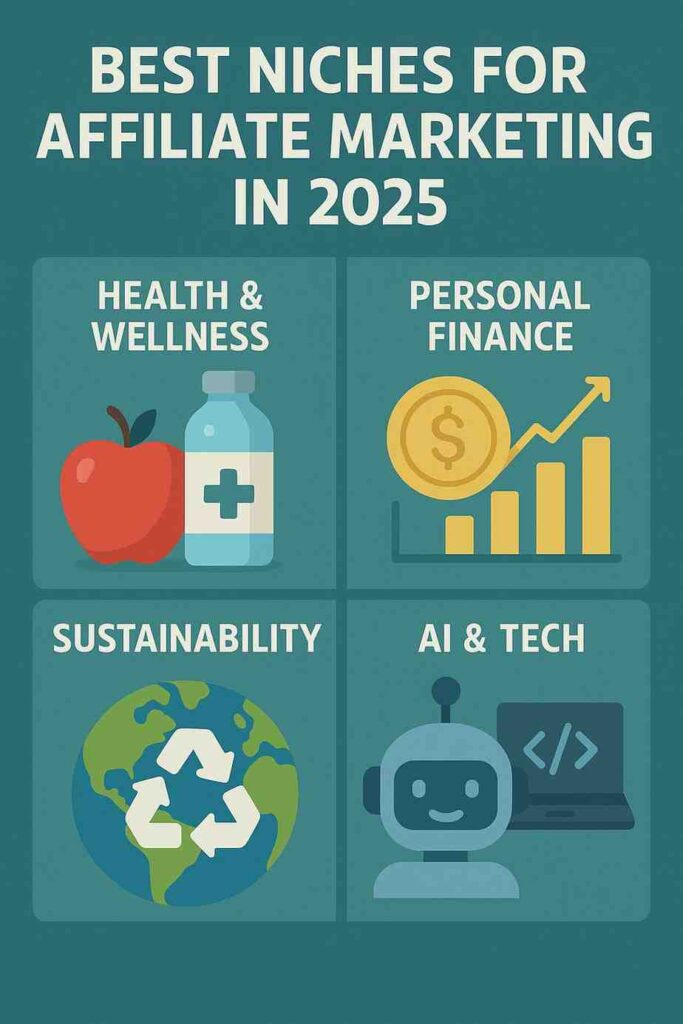
What Are the Best Niches for Affiliate Marketing in 2025?
Affiliate marketing continues to be a lucrative opportunity for individuals and businesses looking to monetize their online presence by promoting products or services in exchange for commissions. Choosing the right niche is critical for success, as it determines the audience you’ll target, the products you’ll promote, and your potential earnings. In 2025, the best niches for affiliate marketing are those that combine high consumer demand, profitable commission structures, and alignment with emerging trends. This essay explores the top affiliate marketing niches for 2025, detailing their profitability, audience appeal, and strategies for success, supported by recent industry insights. It also provides a practical example of how to approach one of these niches as a beginner.
Why Choosing the Right Niche Matters
A niche is a specific segment of a market that allows affiliates to focus their content and promotions on a targeted audience. Selecting a profitable niche ensures access to engaged consumers, viable affiliate programs, and sustainable revenue streams. Key factors for choosing a niche include:
- Market Demand: High search volume and consumer interest, as indicated by tools like Google Trends or keyword planners.
- Commission Potential: Access to programs with competitive payouts, such as high-ticket items or recurring commissions.
- Competition Level: Moderate competition allows beginners to rank content and gain traction.
- Evergreen vs. Trending: Evergreen niches (e.g., health, finance) offer consistent demand, while trending niches (e.g., AI tools) capitalize on emerging markets.
- Personal Interest: Passion or expertise in the niche enhances content authenticity and long-term commitment.
In 2025, certain niches stand out due to market growth, technological advancements, and shifting consumer behaviors. Below are the top niches, their characteristics, and strategies for success, based on recent industry data and trends.
Top Affiliate Marketing Niches for 2025
1. Software and SaaS (Software as a Service)
Why It’s Profitable: The Software and SaaS niche is booming due to the increasing reliance on digital tools for business and personal use. The global SaaS market is projected to grow significantly, with businesses and individuals seeking solutions for project management, marketing, and productivity. SaaS affiliate programs often offer recurring commissions, providing passive income as long as referred customers remain subscribed. For example, programs like GetResponse offer 40–60% recurring commissions for the first 12 months, while Coupler.io provides 25% recurring commissions for analytics tools.

Sub-Niches:
- CRM systems (e.g., HubSpot, Salesforce)
- Email marketing tools (e.g., Mailchimp, ConvertKit)
- Web hosting (e.g., Bluehost, SiteGround)
- VPN and cybersecurity software
Strategies:
- Create in-depth tutorials or comparison guides (e.g., “HubSpot vs. Salesforce: Which CRM Is Best for Small Businesses?”).
- Target entrepreneurs and marketers through blog posts or YouTube videos.
- Leverage SEO for keywords like “best project management software 2025.”
Challenges: High competition requires strong content and SEO skills to stand out.
2. Personal Finance and Investment
Why It’s Profitable: Personal finance remains an evergreen niche due to universal interest in money management, especially among younger generations facing inflation and financial uncertainty. The personal finance software market is expected to grow from $8.91 billion in 2025 to $14.81 billion by 2034. High-ticket programs like American Express (up to $200 per approved credit card application) and SoFi (up to $1,000 per investment product referral) offer substantial payouts.
Sub-Niches:
- Budgeting apps (e.g., YNAB, Mint)
- Investment platforms (e.g., Robinhood, Webull)
- Cryptocurrency and money transfer services (e.g., Wise)
Strategies:
- Write detailed reviews or guides (e.g., “How to Start Investing with Robinhood in 2025”).
- Create content around seasonal trends, like tax season or New Year financial planning.
- Demonstrate expertise to meet Google’s E-A-T (Expertise, Authoritativeness, Trustworthiness) standards for YMYL (Your Money, Your Life) content.

Challenges: YMYL content faces strict Google scrutiny, requiring credible, transparent content.
3. Health and Wellness
Why It’s Profitable: The global health and wellness market is projected to exceed $6 trillion by 2025, driven by increased focus on physical and mental well-being post-COVID. Consumers are willing to invest in premium products like supplements, fitness gear, and wearable technology, with sub-niches like mental health and telehealth gaining traction. Average monthly revenue in this niche is around $2,054.75, per Diggity Marketing.
Sub-Niches:
- Fitness equipment and apps
- Nutrition and supplements
- Mental health resources
- Alternative medicine
Strategies:
- Produce video content, such as workout routines or supplement reviews, for platforms like YouTube or TikTok.
- Partner with brands offering high commissions, like wearable fitness tech providers.
- Share personal stories to build trust and engagement.
Challenges: Intense competition requires differentiation through unique content or micro-niches (e.g., vegan fitness).
4. eLearning and Online Education
Why It’s Profitable: The eLearning market is forecasted to reach $53.13 billion by 2027, fueled by demand for upskilling and remote learning. Programs like Rocket Languages offer high payouts ($80–$120 per sale), and the niche appeals to a broad audience, from students to professionals.
Sub-Niches:
- Language learning platforms
- Career development courses
- Self-improvement and life coaching
- Coding bootcamps
Strategies:
- Create content tied to personal growth stories (e.g., “How I Learned Spanish in 3 Months with Rocket Languages”).
- Promote courses via blog posts, webinars, or social media.
- Target professionals via LinkedIn or X with career-focused content.
Challenges: Requires understanding the audience’s learning goals to recommend relevant courses.
5. Travel and Tourism
Why It’s Profitable: The travel industry, representing 9.1% of global GDP ($9.9 trillion), is rebounding strongly in 2025, with millennials and Gen Z prioritizing experiential travel. High-ticket items like cruises (projected $44.39 billion by 2025) and booking platforms (e.g., Booking.com, Airbnb) offer attractive commissions.
Sub-Niches:
- Budget travel gear
- Travel insurance
- Guided tours and cruises
- Accommodation booking
Strategies:
- Create visually appealing content on Instagram or Pinterest (e.g., “Top 10 Budget Travel Destinations for 2025”).
- Share packing guides or travel tips with embedded affiliate links.
- Focus on experiential travel trends, like cultural immersion or eco-tourism.
Challenges: Seasonal fluctuations require timely content updates.
6. Beauty and Personal Care
Why It’s Profitable: The global beauty market is expected to reach $716 billion by 2025, with skincare and cosmetics driving growth. Programs like Yves Rocher (15% commission) and Olive Young (13% for K-Beauty) offer high payouts, and the “lipstick effect” ensures demand during economic downturns.
Sub-Niches:
- Skincare and cosmetics
- Sustainable beauty products
- Men’s grooming
- Haircare
Strategies:
- Leverage Instagram or TikTok for tutorials and product demos.
- Write in-depth reviews or comparison posts (e.g., “Best Organic Skincare Brands for 2025”).
- Target digitally savvy audiences aged 18–45 with influencer collaborations.
Challenges: High competition requires unique angles, like focusing on sustainable or niche brands.
7. Home and Lifestyle
Why It’s Profitable: The home decor market is projected to reach $556.20 billion by 2028, driven by increased interest in home improvement. Affiliates can promote furniture, smart home devices, and decor, with opportunities for repeat purchases.

Sub-Niches:
- Home decor and furniture
- Smart home technology
- Gardening and outdoor living
- Sustainable home products
Strategies:
- Create content like “How to Style Your Living Room on a Budget” with affiliate links to decor items.
- Use Pinterest for visual inspiration boards.
- Promote seasonal trends, like holiday decor.
Challenges: Broad niche requires focusing on specific sub-niches to avoid dilution.
8. Pet Care
Why It’s Profitable: The pet market is expected to grow to $350.3 billion by 2027, with millennials treating pets as family members. Tech-savvy products like smart feeders and pet cameras are trending, offering high commissions.
Sub-Niches:
- Pet tech (e.g., smart feeders, GPS trackers)
- Pet nutrition and supplements
- Pet grooming products
- Breed-specific accessories
Strategies:
- Share personal pet care stories to connect with audiences.
- Create video reviews of pet tech on YouTube.
- Target pet owners via niche blogs or Instagram.
Challenges: Competitive niche requires specialization (e.g., focusing on dog training tools).
9. Gaming and Esports
Why It’s Profitable: The gaming industry, valued at $203.12 billion, is projected to reach $546 billion by 2028. High-ticket items like gaming PCs (e.g., Alienware, up to 6% commission on $3,000–$9,000 products) yield significant earnings.
Sub-Niches:
- Gaming hardware (e.g., Razer, Alienware)
- Gaming subscriptions and apps
- Esports betting
- AR/VR gaming
Strategies:
- Produce unboxing videos or game reviews on YouTube.
- Target younger audiences on Twitch or TikTok.
- Promote accessories like gaming chairs alongside hardware.
Challenges: Rapid product cycles require staying updated on trends.
10. Sustainable Living
Why It’s Profitable: Growing environmental awareness drives demand for eco-friendly products, with sustainable living gaining traction in 2025. Niches like eco-friendly home goods or renewable energy solutions offer moderate competition and engaged audiences.
Sub-Niches:
- Eco-friendly products (e.g., reusable straws, solar chargers)
- Sustainable fashion
- Zero-waste lifestyle
- Green tech
Strategies:
- Create content around sustainable lifestyle tips (e.g., “10 Ways to Reduce Your Carbon Footprint”).
- Use Instagram or Pinterest for visually appealing eco-product promotions.
- Partner with brands like Printify for sustainable print-on-demand products.

Challenges: Lower commission rates may require higher sales volumes.
How to Choose the Best Niche for You
To select a niche for 2025, consider:
- Passion and Expertise: Choose a niche you enjoy or know well to create authentic content.
- Market Research: Use tools like Google Trends, Ahrefs, or Domain Hunter Gatherer to validate demand and competition.
- Affiliate Program Availability: Ensure multiple programs exist (e.g., Amazon Associates for broad niches, niche-specific programs for higher commissions).

- Audience Engagement: Focus on niches with passionate audiences, like hobbyists or pet owners, for higher conversions.
- Platform Fit: Match the niche to your platform (e.g., visual niches like beauty for Instagram, tech for YouTube).

Recent X posts highlight trending niches like skincare, finance, and pets, reflecting current sentiment among marketers.


Example: Starting in the Health and Wellness Niche
Scenario: Alex, a fitness enthusiast, wants to start affiliate marketing in the health and wellness niche, aiming to earn $300/month within six months.
Step-by-Step Approach:
- Niche Selection (Week 1):
- Alex chooses the “fitness equipment” sub-niche, focusing on home gym tools like resistance bands and yoga mats, due to high demand and personal interest.
- Research and Programs (Weeks 2–3):
- Alex joins Amazon Associates (4–8% commissions on fitness gear) and a niche program like Rogue Fitness (5–10% commissions). He uses Google Trends to confirm rising searches for “home workout equipment.”
- Build a Platform (Weeks 4–5):
- Alex starts a blog, “FitHomeHub,” using WordPress ($50/year for hosting via Bluehost). He adds an affiliate disclosure and pages for reviews and guides.
- He creates an Instagram account to share workout tips and product photos.
- Create Content (Weeks 6–12):
- Alex writes posts like “Top 10 Resistance Bands for Home Workouts” and “Best Yoga Mats for Beginners,” embedding affiliate links.
- He posts a YouTube video reviewing a Rogue Fitness kettlebell, linking to Amazon and Rogue in the description.
- Content is optimized for keywords like “best home gym equipment 2025.”
- Drive Traffic (Weeks 13–20):
- Alex shares blog posts on Pinterest, creating pins that drive 1,000 monthly visitors.
- On Instagram, he posts daily workout tips, gaining 500 followers and 100 link clicks/month.
- He builds an email list with a free “7-Day Home Workout Plan,” collecting 200 subscribers and sending weekly newsletters with links.
- Track and Optimize (Weeks 21–24):
- Alex’s Amazon dashboard shows 20 resistance band sales ($500 total, $25 commission at 5%) and 10 Rogue kettlebell sales ($1,000 total, $80 commission at 8%), totaling $105/month.
- He notices the kettlebell video performs best, so he creates more video reviews and joins Fitbit’s affiliate program for wearable tech.
- Alex optimizes posts for SEO, improving rankings and increasing traffic to 2,000 visitors/month.
- Scale (Months 6–12):
- By month six, Alex earns $320/month from 40 total sales, exceeding his goal. He expands to TikTok, posting short workout demos, and joins a supplement affiliate program to diversify.
Analysis: Alex’s success comes from choosing a high-demand sub-niche, leveraging multiple platforms (blog, YouTube, Instagram, Pinterest), and optimizing content based on performance. His focus on evergreen fitness products ensures consistent earnings, while adding trending products like wearables boosts growth.
Challenges in Choosing a Niche
- High Competition: Popular niches like health and finance require strong SEO and content strategies.
- Low Commissions in Broad Programs: Amazon Associates offers lower rates, necessitating high sales volumes.
- Market Saturation: Overcrowded niches demand unique angles or micro-niches (e.g., “vegan fitness” vs. general fitness).
- Keeping Up with Trends: Rapidly evolving niches like tech or gaming require staying updated on new products.
Best Practices for 2025
- Focus on Micro-Niches: Target specific segments (e.g., “sustainable pet products” instead of “pet care”) to reduce competition.
- Leverage Multiple Platforms: Combine blogs, YouTube, Instagram, and email for broader reach.
- Build Trust: Use personal stories, expertise, and transparent disclosures to meet E-A-T standards and engage audiences.
- Monitor Trends: Use Google Trends and X posts to stay ahead of emerging niches like AI or sustainable living.
- Diversify Programs: Join multiple affiliate programs to spread risk and maximize earnings.
Conclusion
The best affiliate marketing niches for 2025—Software and SaaS, Personal Finance, Health and Wellness, eLearning, Travel, Beauty, Home and Lifestyle, Pet Care, Gaming, and Sustainable Living—offer a mix of evergreen stability and trending opportunities. Each niche has unique advantages, from recurring commissions in SaaS to high-ticket payouts in travel and gaming. Success requires aligning your niche with your interests, researching market demand, and creating valuable, targeted content. Alex’s example in the health and wellness niche demonstrates how beginners can leverage multiple channels and optimize strategies to achieve sustainable earnings. By focusing on high-demand niches, staying adaptable to trends, and building trust with audiences, affiliate marketers can thrive in the dynamic digital landscape of 2025.