
Introduction
In the fast-paced world of digital marketing, attention is currency. Capturing that attention is a challenge—but guiding it toward meaningful action is the real goal. That’s where Call-to-Actions (CTAs) come in.
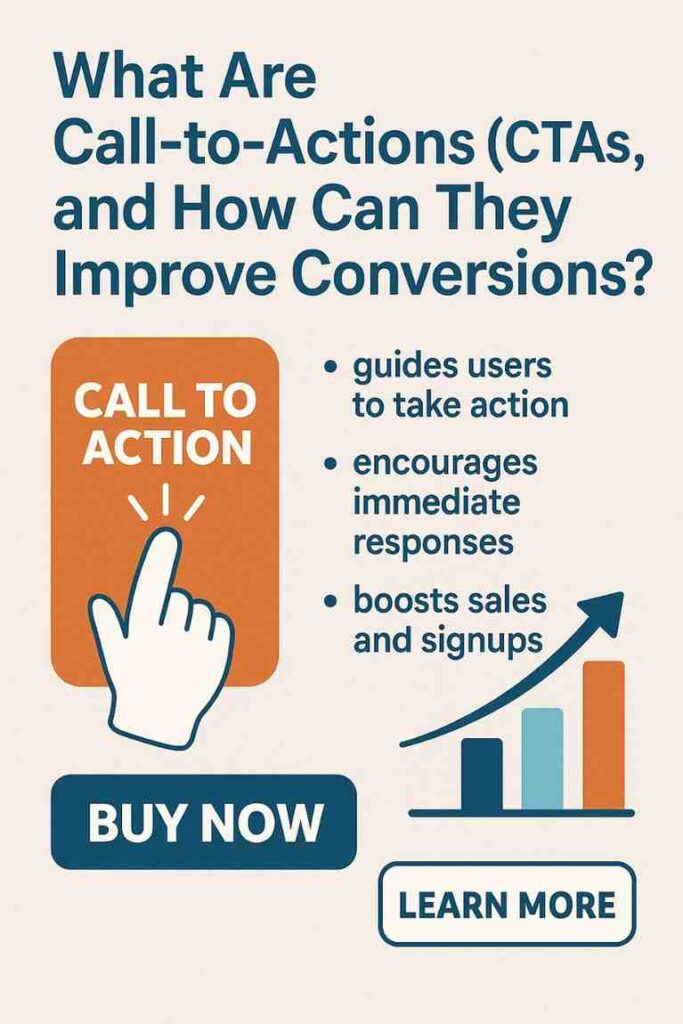
A Call-to-Action (CTA) is a prompt that encourages users to take a specific action, such as subscribing to a newsletter, downloading a resource, making a purchase, or clicking an affiliate link. CTAs are the bridge between engagement and conversion—they guide the user from being a passive reader or viewer to an active participant in your funnel.
CTAs are everywhere: on websites, emails, landing pages, blogs, pop-ups, YouTube videos, and even social media captions. They are not just optional enhancements—they are critical conversion tools that make your content or campaign goal-driven.
In this comprehensive guide, we’ll break down:
-
What CTAs are
-
Different types of CTAs
-
Why they are essential for conversions
-
Best practices for creating high-performing CTAs
-
Common mistakes to avoid
-
A real-world example that demonstrates CTAs in action
What is a Call-to-Action (CTA)?
A Call-to-Action is a phrase, button, link, or visual cue that tells users what to do next. It typically appears after some form of content (e.g., a blog post, email, video) and provides clear instructions about the desired action.
Examples of Simple CTAs:
-
“Buy Now”
-
“Download the Guide”
-
“Sign Up for Free”
-
“Subscribe to Our Channel”
-
“Try It Risk-Free”
-
“Get 30% Off Today”
CTAs can be text-based, graphic, or interactive. The key is that they are intentional and clearly direct users to take a specific, measurable action.
Why CTAs Matter in Marketing and Conversions
Every marketing effort—from content creation to ad campaigns—has an objective. You might want users to:
-
Buy a product
-
Join an email list
-
Share your content
-
Download a freebie
-
Sign up for a trial
But users won’t do these things on their own—you have to guide them.
That’s what CTAs do. They:
-
Focus attention on the next step
-
Motivate action
-
Reduce friction by clearly stating what to do
-
Increase conversion rates
Think of CTAs as digital signposts. Without them, users can get lost, distracted, or disengaged—no matter how good your content is.
Types of Call-to-Actions
CTAs come in many forms depending on their purpose. Let’s explore the most common types:
1. Lead Generation CTAs
These are designed to capture user information (email, name, etc.) for future marketing.
Examples:
-
“Download Our Free E-book”
-
“Get Your Free Checklist Now”
-
“Join Our Newsletter for Weekly Tips”
Where to Use:
Blogs, pop-ups, sidebars, landing pages.
2. Click-Through CTAs
These CTAs move users to another page—typically a product or sales page.
Examples:
-
“Learn More”
-
“See Pricing”
-
“Shop Now”
Where to Use:
Homepage, ads, email campaigns.
3. Sales-Focused CTAs
The goal here is immediate conversion: get users to buy or sign up.
Examples:
-
“Add to Cart”
-
“Buy Now and Save 25%”
-
“Start Free Trial Today”
Where to Use:
Product pages, landing pages, checkout pages.
4. Social Media CTAs
These CTAs encourage sharing, engagement, or following.
Examples:
-
“Tag a Friend Who Needs This!”
-
“Share This Post”
-
“Follow Us for More Tips”
Where to Use:
Instagram captions, Facebook ads, TikTok videos, Pinterest pins.
5. Event/Registration CTAs
Designed to get sign-ups for events, webinars, or appointments.
Examples:
-
“Reserve Your Spot Now”
-
“Register for the Free Webinar”
-
“Book Your Consultation”
Where to Use:
Webinar pages, emails, social media, LinkedIn.
6. Affiliate CTAs
These promote products/services with your affiliate link.
Examples:
-
“Get Grammarly Premium at 20% Off”
-
“Start Your Blog with Bluehost Today”
-
“Try Canva Pro – Free for 30 Days”
Where to Use:
Affiliate blogs, YouTube videos, resource pages, review sites.
The Psychology Behind Effective CTAs
An effective CTA taps into human psychology and decision-making triggers:
✅ Urgency
-
“Limited time only”
-
“Offer expires tonight”
Creates FOMO (fear of missing out), encouraging faster action.
✅ Scarcity
-
“Only 5 spots left”
-
“Last chance to enroll”
Triggers action by making the offer feel exclusive or time-sensitive.
✅ Benefit-Driven Language
-
“Boost your productivity today”
-
“Start your weight loss journey”
Tells users what’s in it for them, not just what to do.
✅ Clarity and Simplicity
-
“Download the guide”
-
“Sign up now”
People are more likely to act when the next step is crystal clear.
How CTAs Improve Conversions
Here’s how CTAs directly influence your marketing results:
1. Guide Users Through the Funnel
CTAs help users move from one stage to another—awareness to interest, interest to decision, and decision to purchase.
For example:
-
Read blog → “Download Free Checklist” → Email list → “Buy Course”
2. Turn Passive Visitors into Leads or Customers
You can’t assume visitors will take action on their own. A CTA gives them that nudge.
Without CTAs:
User reads your blog and leaves.
With CTAs:
User reads your blog, signs up, and becomes a lead.
3. Increase Engagement
CTAs can increase interactions like shares, comments, and time-on-page, boosting your SEO and overall marketing performance.
4. Improve ROI
By encouraging specific actions, CTAs ensure your marketing efforts are focused on outcomes, not just traffic or clicks.
Real-World Example: CTAs in a Blog Funnel
Let’s take the example of Sarah, a fitness blogger who earns through affiliate marketing and digital products.
Her Blog Post:
“10 Best Protein Powders for Women in 2025”
She Adds These CTAs Strategically:
-
Inline Text CTA:
“Want to know which protein powder I personally use? Click here to find out.” -
Image CTA:
A banner saying: “Get 20% Off My Favorite Plant-Based Protein – Shop Now” -
End of Post CTA:
“Still unsure which protein suits your lifestyle? Download my free Protein Picker Guide below.” -
Exit-Intent Pop-Up:
“Wait! Get a free 7-day clean eating meal plan when you subscribe!”
Results:
-
Affiliate sales from people clicking the shop link.
-
New email subscribers who receive future product promotions.
-
Longer page engagement and social shares due to relevant content and CTAs.
Sarah’s CTAs convert because they:
-
Are relevant to the topic
-
Solve problems (protein confusion)
-
Offer value (free guide)
-
Guide the next logical step
Best Practices for Crafting High-Converting CTAs
-
✅ Be Clear, Not Clever
Ambiguity kills conversions. Say exactly what happens when they click. -
✅ Use Action-Oriented Verbs
Start with verbs like Download, Get, Start, Discover, Learn, Try. -
✅ Highlight Benefits
Instead of “Click here,” say “Click to Get Your Free Budgeting Template.” -
✅ Create Visual Contrast
Make your CTA buttons stand out using colors that contrast the background. -
✅ Place CTAs Strategically
Use above-the-fold, mid-content, and end-of-content placements for maximum exposure. -
✅ Test and Optimize
A/B test different CTA texts, colors, placements, and formats to see what drives the best results.
Common Mistakes to Avoid with CTAs
❌ Being Vague:
“Submit” or “Click here” without context is weak.
❌ Overwhelming Users with Too Many CTAs:
More is not better. Focus on one goal per page.
❌ Not Mobile-Friendly:
Ensure CTAs are easy to tap and read on phones and tablets.
❌ Forgetting to Track CTA Performance:
Use tools like Google Analytics, Hotjar, or native email analytics to monitor clicks and conversions.
Conclusion
In affiliate marketing, blogging, eCommerce, or lead generation—Call-to-Actions are the turning point. They are the moment where your effort pays off: when a user decides to do something because you asked them clearly, confidently, and at the right time.
Whether you want to grow your list, increase affiliate income, boost engagement, or drive traffic to a sales page, your CTA is the key.
Think of your CTA as your digital salesperson. It doesn’t shout. It doesn’t beg. It simply says: “Here’s what to do next, and here’s why it matters.”
A well-placed, well-crafted CTA can double or even triple your conversion rate. So don’t leave it to chance—design CTAs with purpose, measure their impact, and refine them continually.
Want help writing CTAs for your blog, landing page, or affiliate campaign? I can help you create persuasive, goal-driven CTAs tailored to your niche or audience—just let me know your project!