
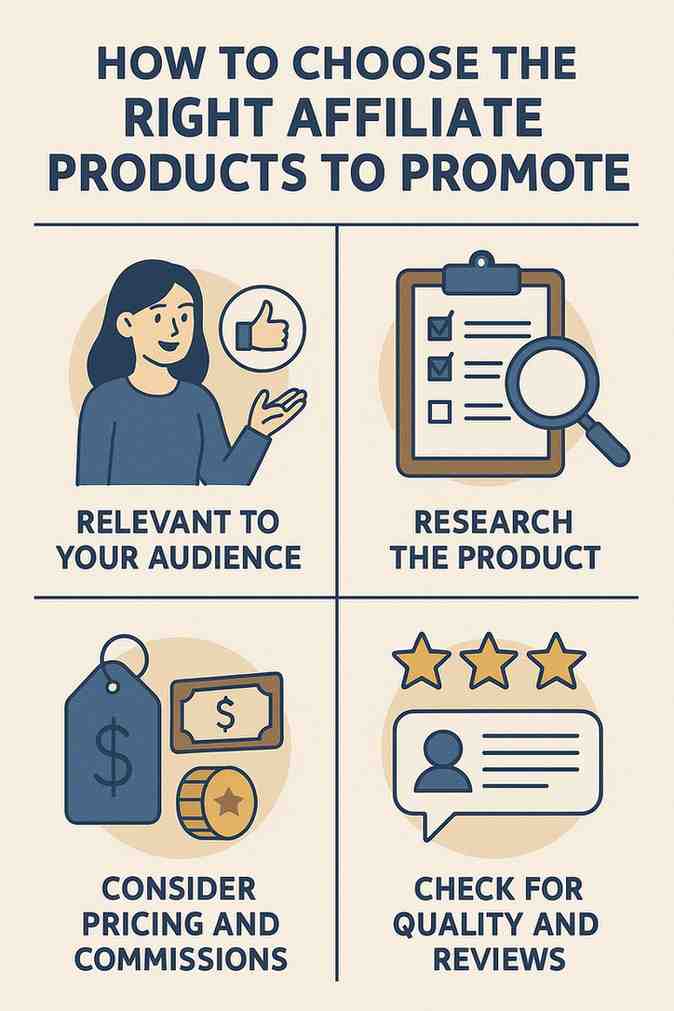
Affiliate marketing has emerged as one of the most accessible and profitable online income opportunities in the digital era. However, your success as an affiliate doesn’t just depend on how well you market products—it starts with choosing the right affiliate products to promote. This decision can make or break your affiliate business, especially if you’re a beginner or trying to scale your affiliate income.
In this comprehensive guide, we will explore how to choose the best affiliate products step-by-step, what factors to consider, common mistakes to avoid, and how to align your choices with your audience’s needs. We’ll also provide a detailed, real-world example to demonstrate how it works in practice.
Why Choosing the Right Product Matters
Affiliate marketing is performance-based. That means you only earn when someone takes action—usually a purchase—through your unique affiliate link. If the product you’re promoting is irrelevant, overpriced, low-quality, or lacks trust, even the best marketing efforts won’t help.
Key reasons why the right product matters:
-
Builds trust with your audience
-
Improves conversion rates
-
Generates long-term passive income
-
Enhances your personal brand or content authority
-
Reduces refund and complaint rates
In contrast, promoting bad or irrelevant products can ruin your credibility and even get you banned from affiliate programs.
Step-by-Step Guide to Choosing the Right Affiliate Products
Step 1: Understand Your Niche and Audience
You must first understand your niche and the specific needs of your target audience. Without knowing who you’re speaking to, you can’t recommend the right solutions.
🔍 Ask Yourself:
-
What is my niche (e.g., fitness, beauty, tech, travel)?
-
Who is my audience (age, gender, location, profession)?
-
What problems or desires do they have?
-
What kind of products do they already buy?
🎯 Example:
If your blog focuses on home workouts for busy moms, don’t promote bodybuilding supplements or advanced gym gear. Instead, promote yoga mats, quick workout apps, or home-friendly fitness gear.
Step 2: Ensure Product Relevance and Usefulness
Relevance is key. The product should solve a real problem or satisfy a real need for your audience.
✅ A good affiliate product:
-
Aligns with your niche
-
Offers clear value or benefits
-
Matches your audience’s goals or pain points
Irrelevant promotions feel forced, reduce conversions, and may hurt trust.
❌ Poor Example:
A tech blogger promoting kitchen cookware just because the commission is high.
✅ Better Example:
A tech blogger promoting noise-cancelling headphones or a VPN service.
Step 3: Evaluate Product Quality
Don’t just chase commissions. Promote products you’ve used, tested, or researched deeply. Always prioritize quality over profit.
🔍 What to Check:
-
Ratings and reviews on platforms like Amazon, Google, or Trustpilot
-
Return and refund policies
-
Support and warranty services
-
Overall brand reputation
You can even buy or request a trial version of a product before promoting it.
🎯 Example:
You test three fitness apps for beginners and only promote the one with the best UX, workout library, and pricing.
Step 4: Analyze the Commission Structure
The right affiliate product must balance value for your audience and earning potential for you. Commissions vary widely based on product type and network.
🔢 Types of Commissions:
-
CPS (Cost Per Sale): % of sale amount (e.g., 10%-50%)
-
CPA (Cost Per Action): Fixed payout for actions (signups, trials)
-
Recurring Commissions: Monthly commissions on subscription renewals (common in SaaS)
📈 Choose Based on:
-
Product price (higher-priced items yield higher commission but may sell less)
-
Commission rate
-
Cookie duration (how long after the click you still get credit for the sale)
-
Payout threshold and schedule
✅ Ideal Scenario:
Promote a ₹2,000 product with 30% commission = ₹600 per sale.
If it’s a SaaS product offering 30% recurring, that income compounds over time.
Step 5: Join Trustworthy Affiliate Programs or Networks
Always choose affiliate programs with strong reputations. You need a platform that offers transparency, proper tracking, timely payouts, and robust support.
🔒 Reliable Networks:
-
Amazon Associates – Great for physical products, but low commission.
-
ShareASale, CJ Affiliate, Impact – Offer products across categories.
-
ClickBank – Great for digital info products and courses.
-
PartnerStack – Ideal for SaaS and software tools.
⚠️ Watch Out For:
-
Delayed or missing commissions
-
Unclear or changing terms
-
Fake products or programs
-
No support or customer service
Step 6: Check the Product’s Conversion Potential
Even if a product is relevant and high quality, it needs to convert — otherwise, you won’t earn.
📌 Indicators of High Conversion Potential:
-
Well-designed landing page
-
Strong call-to-action
-
Money-back guarantee
-
Positive testimonials
-
Mobile optimization
-
Easy checkout process
You can also look for EPC (Earnings Per Click) or conversion rates in some affiliate networks to gauge effectiveness.
Step 7: Consider the Brand’s Reputation
Your reputation is tied to the product you recommend. If your audience has a bad experience, they’ll likely blame you — not the seller.
⭐️ Evaluate:
-
Social media presence
-
Reviews and feedback
-
Customer support responsiveness
-
Market standing (is it well-known?)
Promoting a reputable brand also improves trust, which directly impacts your conversions.
Step 8: Test and Compare Products
Before committing to promoting one product long-term, test a few. Compare how each performs in terms of clicks, engagement, and sales.
🧪 A/B Testing Options:
-
Promote two similar products in two different blog posts
-
Compare in a “Product A vs Product B” article
-
Use tracking links to monitor performance
Choose the one that gives the best combination of conversions and feedback.
Step 9: Check Legal and Ethical Guidelines
As an affiliate, you must follow:
-
Disclosure rules (FTC guidelines: disclose affiliate links)
-
Data protection laws (GDPR, CCPA, etc.)
-
No spam policies (don’t mass-send affiliate links without permission)
Also, avoid promoting:
-
Fake reviews or testimonials
-
Scammy or misleading products
-
Health products with unverified claims
Being ethical earns long-term trust and prevents bans from affiliate platforms.
✅ Real-Life Example: Riya, the Wellness Blogger
Background:
Riya runs a blog called WellnessWithRiya, where she writes about mindfulness, home workouts, and natural remedies.
1. Niche & Audience:
-
Niche: Holistic wellness and fitness for women
-
Audience: Women aged 25–45, mostly working professionals
2. Research:
-
Through surveys and analytics, Riya learns her readers are interested in stress management and fitness at home.
3. Affiliate Product Options:
-
Online yoga classes (ClickBank)
-
Meditation apps (PartnerStack)
-
Natural supplements (Amazon)
-
Resistance bands (Amazon Associates)
4. Final Choice:
-
Calm App: A meditation and mindfulness app with a strong reputation, recurring commission, and high customer retention.
-
Commission: 40% per sale + 30% monthly recurring.
5. Promotion Strategy:
-
Writes a blog: “5 Ways Meditation Changed My Life”
-
Includes affiliate link with disclosure
-
Shares snippets on Instagram and Pinterest
-
Sends a short email sequence recommending Calm with a coupon
6. Results (After 3 Months):
-
2,000 readers/month on her blog post
-
75 users signed up via her link
-
50 retained after first month = consistent recurring income
Common Mistakes to Avoid
-
Promoting products just for high commissions without audience fit
-
Skipping product research or reviews
-
Not disclosing affiliate relationships (can be illegal)
-
Linking to low-quality or spammy products
-
Ignoring feedback from your readers/subscribers
Conclusion
Choosing the right affiliate products is one of the most important steps in affiliate marketing. It requires more than just signing up and dropping links—it’s a strategic process that involves understanding your audience, researching product quality, evaluating commissions, and staying ethical.
Start small, test what works, and focus on creating genuine value for your readers. The right product can turn a blog post or video into a consistent stream of passive income. But the wrong product can harm your reputation.
By following the steps above and learning from real examples, beginners and intermediate affiliate marketers alike can build a sustainable and trustworthy affiliate business—based on smart product choices, transparency, and meaningful content.