
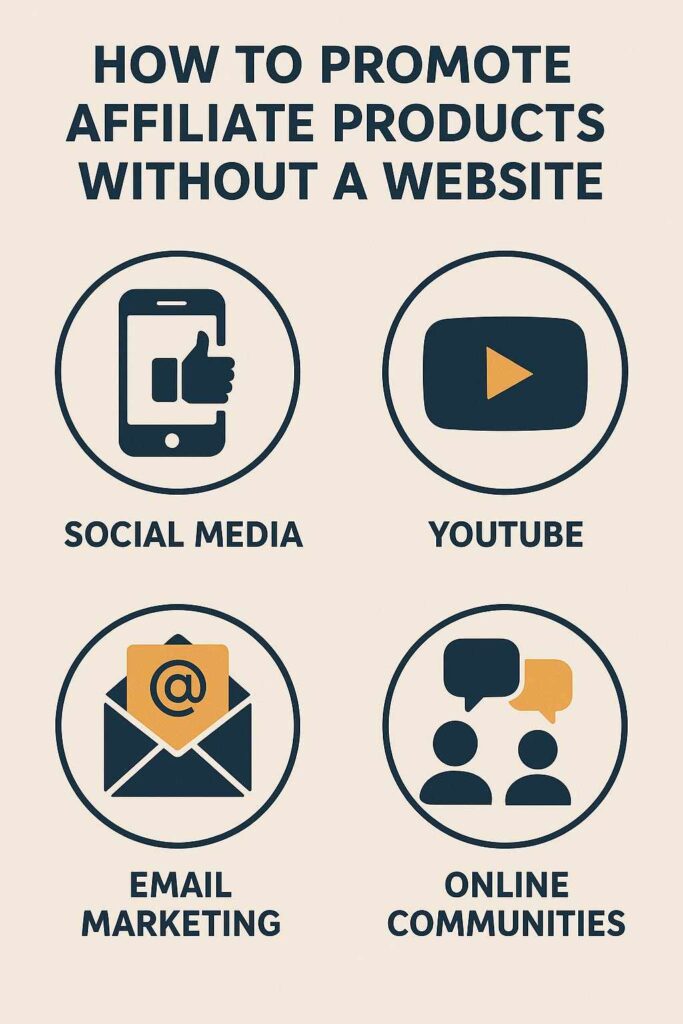
Affiliate marketing is a popular way to earn income by promoting products or services and earning commissions for successful referrals. Traditionally, many affiliates use websites to host content and embed affiliate links, but a website isn’t a requirement to succeed. For beginners, students, or those with limited resources, promoting affiliate products without a website is not only feasible but also highly effective when leveraging alternative platforms like social media, email, video content, and online communities. This essay outlines the strategies, tools, and best practices for promoting affiliate products without a website, detailing their benefits, challenges, and practical applications. A real-world example illustrates how these methods can be combined to build a successful affiliate marketing campaign in 2025.
Why Promote Affiliate Products Without a Website?
Promoting affiliate products without a website offers several advantages, especially for those new to affiliate marketing:
- Low Cost: Eliminates expenses like domain names (~$15/year), hosting (~$50/year), or website builders.
- Quick Start: Platforms like social media or YouTube allow immediate content creation, bypassing website setup time.
- Flexibility: Affiliates can experiment with multiple channels (e.g., Instagram, email) to find what works best.
- Accessibility: Requires only a smartphone or laptop, ideal for students or beginners with limited resources.
However, success without a website demands strategic use of alternative platforms, compelling content, and adherence to affiliate program rules. Below, we explore the key methods for promoting affiliate products without a website, supported by tools and tactics tailored for 2025.
Strategies for Promoting Affiliate Products Without a Website
1. Leverage Social Media Platforms
Social media platforms like Instagram, TikTok, X, and Pinterest are powerful for affiliate marketing due to their massive audiences and engagement potential. They allow affiliates to share affiliate links directly or drive traffic to link-in-bio pages.
- How It Works:
- Instagram: Post product demos, reviews, or lifestyle content with affiliate links in your bio using tools like Linktree (free) to manage multiple links. Stories with swipe-up links (for accounts with 10,000+ followers) can also drive clicks.
- TikTok: Create short, engaging videos showcasing products (e.g., a tech gadget unboxing) with links in your bio. TikTok’s algorithm favors new creators, offering quick visibility.
- X: Share tips, reviews, or deals with shortened affiliate links (using Bitly, free). Engage in niche conversations to build credibility.
- Pinterest: Create pins linking to affiliate product pages or blog posts (if you guest post). Pins drive long-term traffic due to their evergreen nature.
- Tools Needed:
- Canva (free): Design eye-catching posts or pins.
- Bitly (free): Shorten and track affiliate links.
- Linktree (free): Create a landing page for multiple links.
- Best Practices:
- Post consistently (e.g., 3–5 times/week) to build an audience.
- Use hashtags and trends to increase discoverability (e.g., #TechGadgets2025).
- Disclose affiliate relationships per FTC guidelines (e.g., “#ad” or “affiliate link”).
- Benefits: Free, high engagement, and accessible via smartphones.
- Challenges: Platform restrictions (e.g., Instagram’s link-in-bio limit) and algorithm changes require adaptability.
2. Utilize Video Content Platforms
YouTube and TikTok are ideal for video-based affiliate marketing, allowing affiliates to create tutorials, reviews, or unboxings with affiliate links in descriptions or bios.
- How It Works:
- YouTube: Upload in-depth product reviews or how-to videos (e.g., “How to Use a Smart Speaker for Students”) with affiliate links in the description. Monetization isn’t required to include links.
- TikTok: Share quick demos or tips (e.g., a 15-second clip showing a fitness tracker’s features) with links in your bio.
- Tools Needed:
- DaVinci Resolve (free): Edit videos for professional quality.
- Canva (free): Create thumbnails to attract clicks.
- Smartphone camera: Sufficient for basic video recording.
- Best Practices:
- Optimize video titles and descriptions with keywords (e.g., “best budget headphones 2025”).
- Include clear CTAs (e.g., “Link in description to buy!”).
- Build a subscriber base for long-term traffic.
- Benefits: Videos build trust through visual demos, and YouTube content is evergreen.
- Challenges: Video production is time-intensive, and ranking on YouTube takes effort.
3. Build an Email List
Email marketing allows affiliates to nurture leads and promote affiliate products directly to subscribers, offering high conversion rates.
- How It Works:
- Create a lead magnet (e.g., a free eBook or checklist) to attract subscribers.
- Use an email service provider to send newsletters with affiliate links.
- Promote products through value-driven content (e.g., a “Top 5 Study Tools” email).
- Tools Needed:
- Mailchimp (free for up to 500 subscribers): Create and send email campaigns.
- Google Docs (free): Write lead magnets or email drafts.
- Linktree (free): Host lead magnet signup links on social media.
- Best Practices:
- Offer a niche-specific lead magnet (e.g., “10 Budget-Friendly Tech Hacks for Students”).
- Send regular emails (e.g., weekly) with a mix of value and promotions.
- Segment lists to target specific interests (e.g., tech vs. fitness products).
- Benefits: High ROI, direct audience connection, and control over promotions.
- Challenges: Building a list takes time, and email providers may charge as lists grow.
4. Engage in Online Communities
Forums, groups, and communities like Reddit, Quora, or niche-specific platforms allow affiliates to share expertise and subtly promote affiliate products.
- How It Works:
- Reddit: Participate in subreddits (e.g., r/FrugalTech) by answering questions and including affiliate links where allowed (check rules).
- Quora: Answer niche-related questions (e.g., “What’s the best budget laptop for students?”) with affiliate links in responses.
- Facebook Groups: Join niche groups (e.g., “Student Tech Deals”) and share recommendations with disclosures.
- Tools Needed:
- Bitly (free): Track link clicks in community posts.
- Grammarly (free): Ensure professional, clear responses.
- Best Practices:
- Provide genuine value before linking (e.g., detailed advice with a link as a resource).
- Respect community rules to avoid bans.
- Build a reputation as a helpful member to gain trust.
- Benefits: Free, targeted audiences, and high trust for recommendations.
- Challenges: Strict rules against self-promotion require tactful link placement.
5. Use Paid Advertising (Optional)
While not essential, paid ads on platforms like Google Ads or Meta Ads can amplify affiliate promotions for students with a small budget.
- How It Works:
- Create ads targeting niche keywords (e.g., “budget fitness tracker”) or audiences (e.g., students aged 18–24).
- Direct clicks to affiliate links or a Linktree page.
- Tools Needed:
- Google Ads or Meta Ads: Start with a $5–$10/day budget.
- Canva (free): Design ad visuals.
- Best Practices:
- Check affiliate program rules (e.g., Amazon Associates prohibits direct ad links).
- Use low-budget campaigns to test ROI.
- Target high-intent audiences to maximize conversions.
- Benefits: Fast traffic generation and precise targeting.
- Challenges: Requires budget and expertise to avoid losses.
Additional Tools and Best Practices
- Link Management:
- Bitly (free): Shorten and track affiliate links for social media or email.
- Linktree (free): Create a single landing page for multiple affiliate links.
- Analytics:
- Affiliate Network Dashboards: Track clicks and commissions via networks like Amazon Associates or ShareASale.
- Google Analytics (free): Monitor traffic if using a Linktree page.
- Productivity:
- Trello (free): Organize content schedules and campaign plans.
- Notion (free): Track affiliate programs and link performance.
- Compliance:
- Always disclose affiliate relationships (e.g., “This post contains affiliate links”) to comply with FTC guidelines.
- Use Grammarly (free) to ensure clear, professional disclosures.
Total Cost: $0–$10/day (if using paid ads; most tools are free).
Challenges of Promoting Without a Website
- Platform Dependence: Relying on social media or third-party platforms risks algorithm changes or account bans.
- Link Restrictions: Some platforms (e.g., Instagram) limit link placement, requiring workarounds like Linktree.
- Building Trust: Without a website, affiliates must work harder to establish credibility through content quality.
- Tracking Limitations: Non-website platforms offer less granular analytics than Google Analytics on a blog.
Best Practices for Success
- Start with One Platform: Focus on a single channel (e.g., YouTube or Instagram) to master it before expanding.
- Create Authentic Content: Share personal experiences or honest reviews to build trust.
- Engage Actively: Respond to comments or questions to foster community and loyalty.
- Stay Compliant: Adhere to platform rules and disclose affiliate links transparently.
- Learn Continuously: Follow X accounts like @AffiliateTips or YouTube channels for strategies.
Example: Promoting Tech Gadgets Without a Website
Scenario: Liam, a 19-year-old student, wants to earn $200/month promoting tech gadgets (e.g., headphones, smart speakers) using affiliate marketing. He has a smartphone, laptop, and no budget for a website.
Step-by-Step Approach:
- Learn the Basics (Week 1):
- Liam watches YouTube tutorials and follows @AffiliateSummit on X to understand affiliate marketing. He uses Notion (free) to organize program details.
- Choose a Niche (Week 2):
- Liam selects “tech gadgets for students,” focusing on budget-friendly items like earbuds and smart plugs, validated by Google Trends showing high demand.
- Join Affiliate Programs (Week 3):
- Liam joins Amazon Associates (4% commissions on tech) and Best Buy’s program via Impact (0.5–4% commissions). He uses Bitly (free) to shorten links.
- Set Up Platforms (Weeks 4–5):
- Liam creates a YouTube channel, “TechForStudents,” and an Instagram account with the same name. He sets up a Linktree (free) page to host affiliate links for both platforms.
- He adds an affiliate disclosure to his Instagram bio and YouTube descriptions.
- Create Content (Weeks 6–12):
- YouTube: Liam records a video, “Top 5 Budget Earbuds for Students in 2025,” using his smartphone and DaVinci Resolve (free) for editing. He includes Amazon and Best Buy links in the description, optimized for keywords like “best student earbuds.”
- Instagram: He posts daily reels showing gadget features (e.g., a 15-second clip testing a smart plug) with a CTA to “Link in bio.” He designs thumbnails with Canva (free).
- TikTok: Liam cross-posts YouTube clips, gaining traction with #TechGadgets2025.
- Drive Traffic (Weeks 13–20):
- Liam shares YouTube videos on X, engaging in tech discussions and gaining 150 link clicks/month. His videos attract 500 views/month, with 50 clicks to links.
- On Instagram, he gains 400 followers, driving 100 Linktree clicks/month via reels and stories.
- Using Mailchimp (free), Liam offers a “Student Tech Deals Guide” eBook, collecting 120 email subscribers and sending weekly newsletters with links.
- He answers questions on Reddit’s r/FrugalTech, subtly including links where allowed, driving 30 clicks/month.
- Track and Optimize (Weeks 21–24):
- Amazon’s dashboard shows 15 earbud sales ($750 total, $30 commission at 4%) and Best Buy shows 5 smart speaker sales ($1,000 total, $40 commission at 4%), totaling $70/month.
- Liam notices his earbud video performs best, so he creates “Best Wireless Earbuds Under $50” on YouTube and TikTok, boosting earnings to $210/month with 30 total sales.
- He uses Bitly to track Instagram link clicks, optimizing posts with higher-performing CTAs.
Analysis: Liam uses free tools (YouTube, Instagram, TikTok, Canva, Mailchimp, Bitly) and platforms to promote tech gadgets, staying within his $0 budget. His multi-channel approach maximizes traffic, while video and social content build trust. Optimization based on analytics helps him exceed his $200/month goal by month six, proving website-free affiliate marketing is viable for students.
Conclusion
Promoting affiliate products without a website is an accessible and effective strategy for beginners, leveraging platforms like social media (Instagram, TikTok, X, Pinterest), video content (YouTube), email marketing (Mailchimp), and online communities (Reddit, Quora). Free tools like Canva, Bitly, and Linktree streamline content creation and link management, while analytics from affiliate networks guide optimization. Challenges like platform restrictions and trust-building can be overcome with authentic content and compliance. Liam’s example in the tech gadgets niche demonstrates how a student can combine YouTube, Instagram, TikTok, and email to earn $210/month, using only free resources. By focusing on engaging content, targeted promotion, and consistent effort, anyone can succeed in affiliate marketing without a website in 2025, making it an ideal side hustle for students or those with limited budgets.